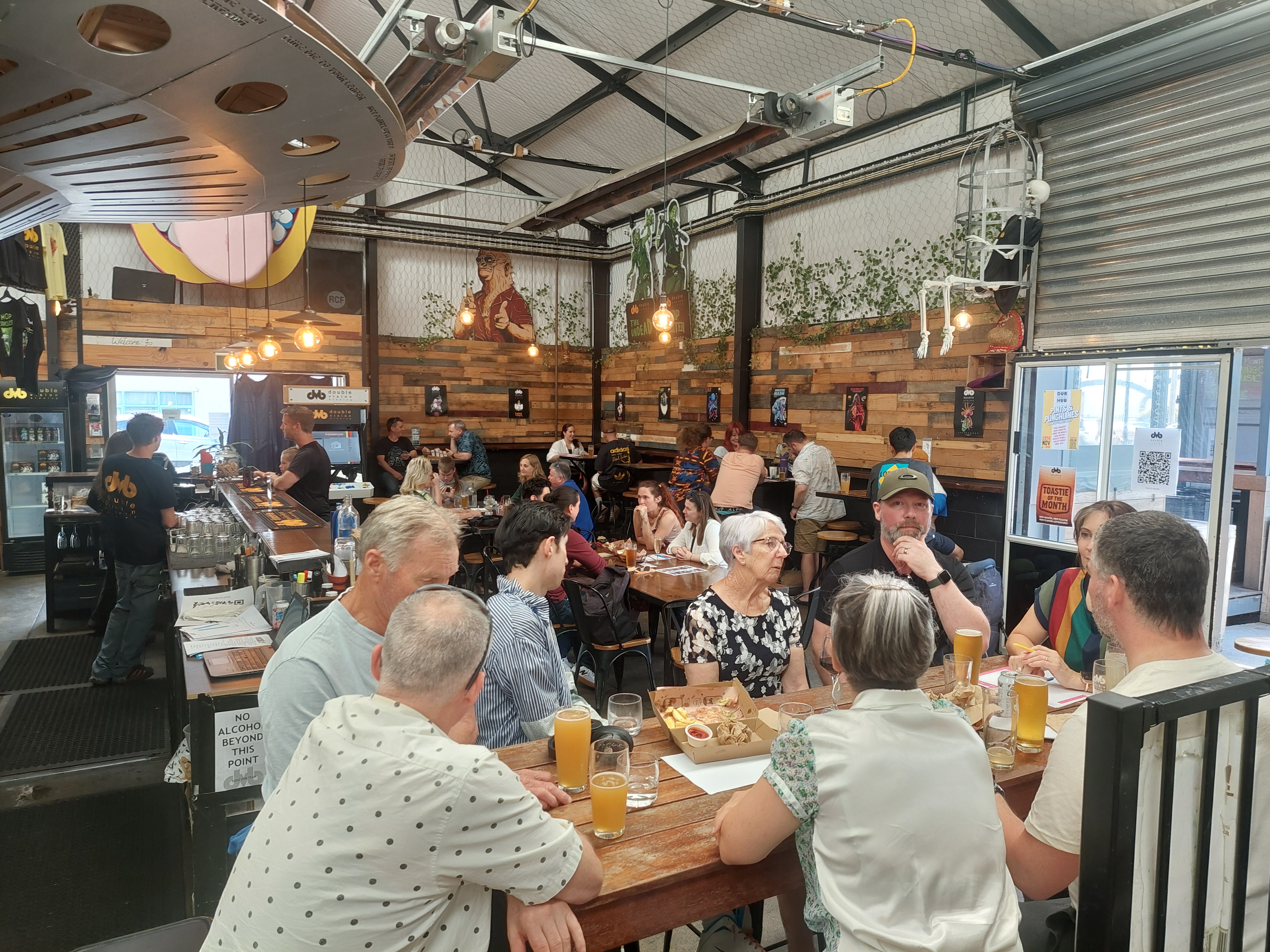
Stonehenge Aotearoa


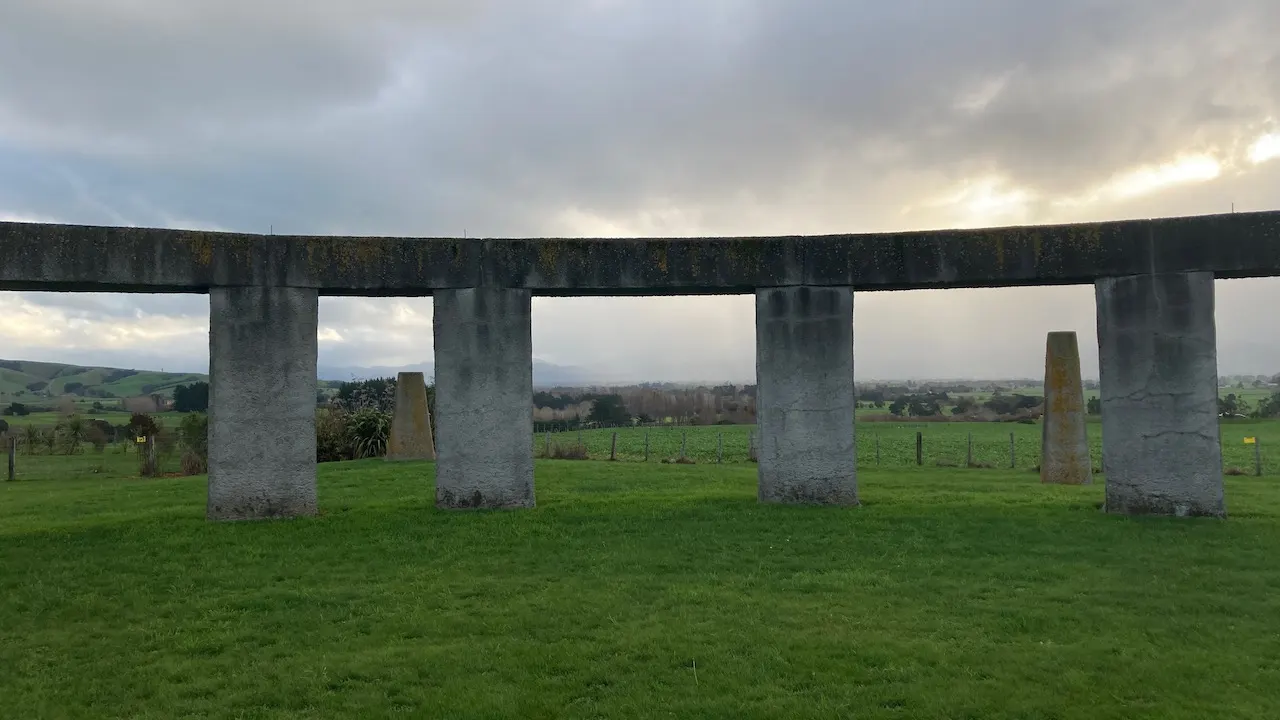
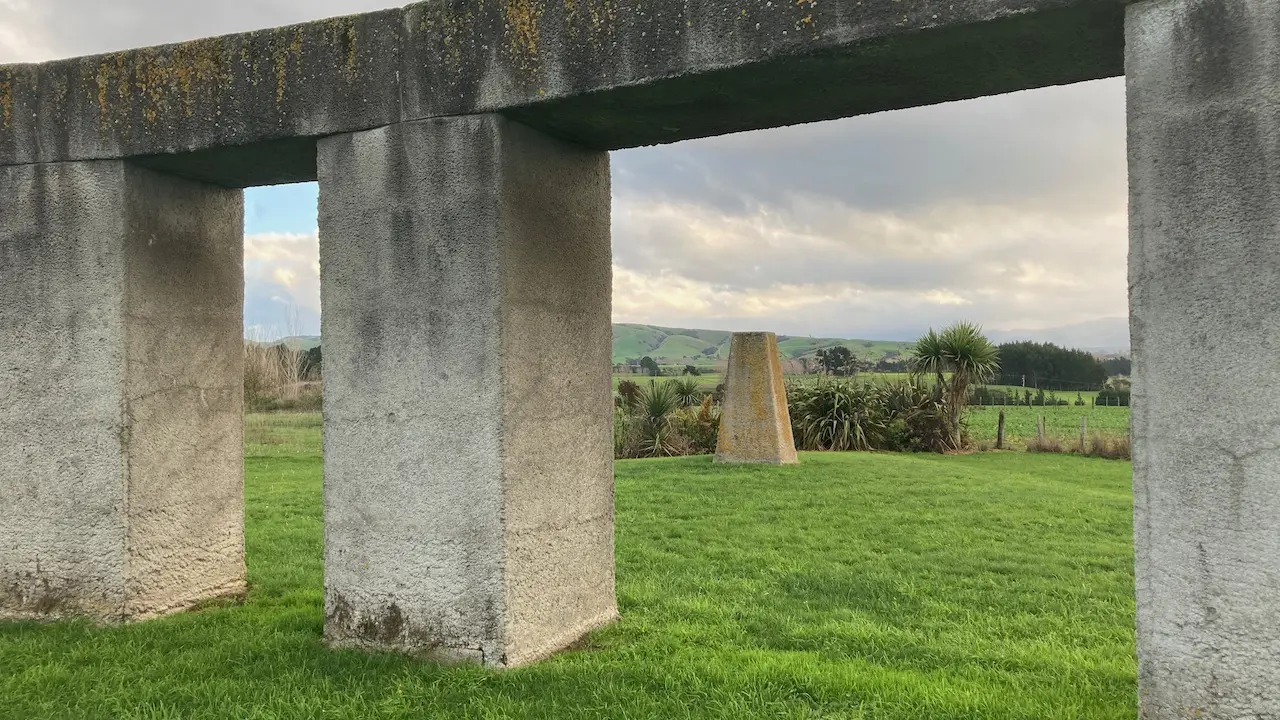

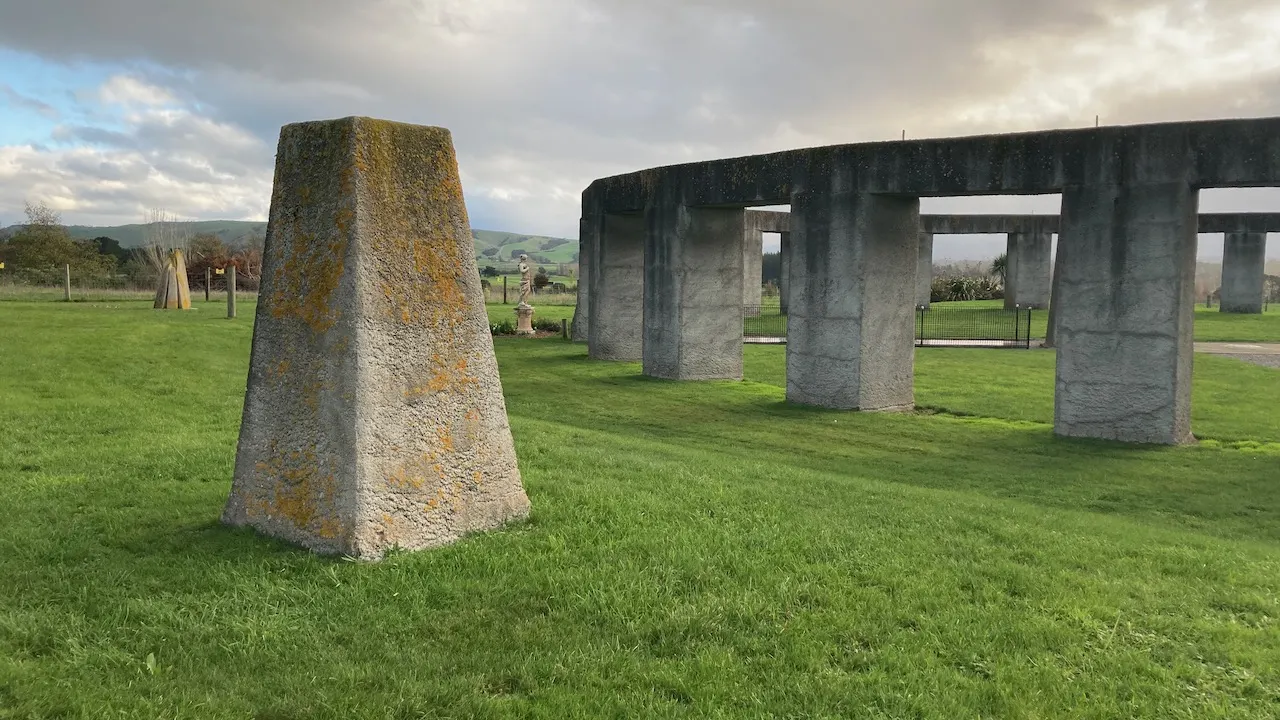


Photo credits: I.Haritina (CC BY-SA 4.0); Mike Dickison (CC BY 4.0)
Getting there
Stonehenge Aotearoa stands on farmland near Carterton in the Wairarapa region of New Zealand's North Island, in the countryside between Masterton and Martinborough (coordinates 41°05′59″S, 175°34′47″E). It is easiest to reach by car on a Wairarapa road-trip loop, making a natural knowledge-focused stop on the drive between Masterton and the Martinborough wine country.
Things to do nearby
The wider Carterton District around the henge offers several related attractions: the Nankivell Observatory, the Fensham Reserve, and the Wairarapa Dark Sky Reserve area, which makes the region especially rewarding for stargazing. The Wairarapa Railway Restoration Society and its heritage stations add another option nearby.
Highlights
This is one of New Zealand's largest astronomical installations: an open-sky observatory with 24 pillars topped by lintels, 30 metres in diameter and about 4 metres high, closely modelled on the sarsen circle of England's Stonehenge. A 5-metre obelisk rises near the centre, with a 10-metre analemma along the meridian line. Entry is via a causeway running due west to the centre, and six heel stones of varying heights stand just outside the circle. Unlike a replica, it is fully recalibrated for the southern sky: the pillars frame the rising points of the Sun, Moon and bright seasonal or navigational stars, and demonstrate the Polynesian star compass. Guided tours show how the stones work as a calendar and astronomical instrument.
History & culture
The henge grew out of the closure of the US Naval Observatory's Black Birch station in the mid-1990s, whose equipment — including an observatory dome — passed to astronomer Gordon Hudson and the newly formed Phoenix Astronomical Society. Built over two years by roughly 150 volunteers with a government grant via the Royal Society of New Zealand, it opened on 12 February 2005, cut by Nobel laureate Professor Alan MacDiarmid. Its design honours Māori astronomy: a sculpture called the Fingers of Mother Earth marks where the heliacal rising of Matariki, the Māori New Year star cluster, is observed around the June winter solstice.
Booking & rules
The site is a non-profit educational astronomical facility and is not open for casual drop-in visits; access is limited to scheduled sessions, guided tours and open days, so visitors should check the Phoenix Astronomical Society's programme in advance. As an attraction it has no campsite-style booking pressure, but forward planning is essential because of the session-only access model.
About this attraction
Stonehenge Aotearoa, built by the Phoenix Astronomical Society on a farm near Carterton, is not a replica but a working adaptation: its rings and heel stones mark solstices, Māori star names and the southern sky's own geometry. Guided tours demonstrate how the stones work as calendar and telescope, weaving in Polynesian navigation, which makes it a nerdy, rewarding stop between Masterton and Martinborough. Visits are by tour or open day only.
Highlights
Take the guided tour to see the solstice alignments demonstrated, learn the Māori star names mapped onto the stones, and stay for an evening astronomy session if one is on.
Cautions
Visits are by tour or open day only — do not turn up unannounced; the site is exposed to Wairarapa wind.
Getting there
On a rural road between Carterton and Martinborough, about 15 minutes' drive from either town; no public transport.
noda attraction index 62
3.1 / 5
How the attraction index works
Each attraction is scored from five verifiable data points, out of 100. This is an editorial index, not a user rating — it reflects how free, how scenic and how well documented a place is, not anyone's personal experience.
| Free bonus | 20 pts | Completely free 20; small fees (parking, gold-coin koha) 10; expensive tickets 0. |
|---|---|---|
| Scenery uniqueness | 25 pts | World Heritage or landmark-level 25, regional 18, local 12 — each listing is explicitly tiered. |
| Things to do | 20 pts | Ranked by the depth of the highlights write-up: full 20, medium 14, brief 10. |
| Information completeness | 20 pts | 15 for having about, best time, cautions and access notes, minus 4 per missing item; plus 5 for two or more official sources. |
| Accessibility | 15 pts | Reachable by car 15, short walk 12, long tramp required 6. |