Stirling Point (Bluff)
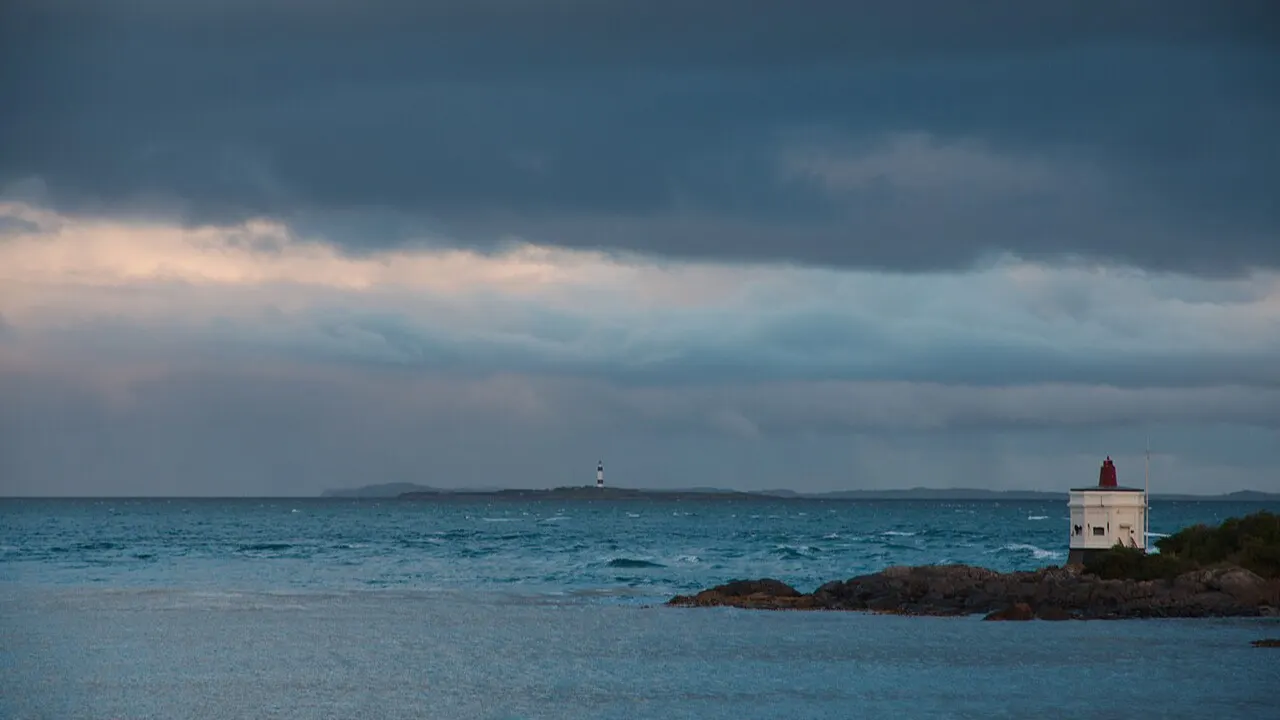
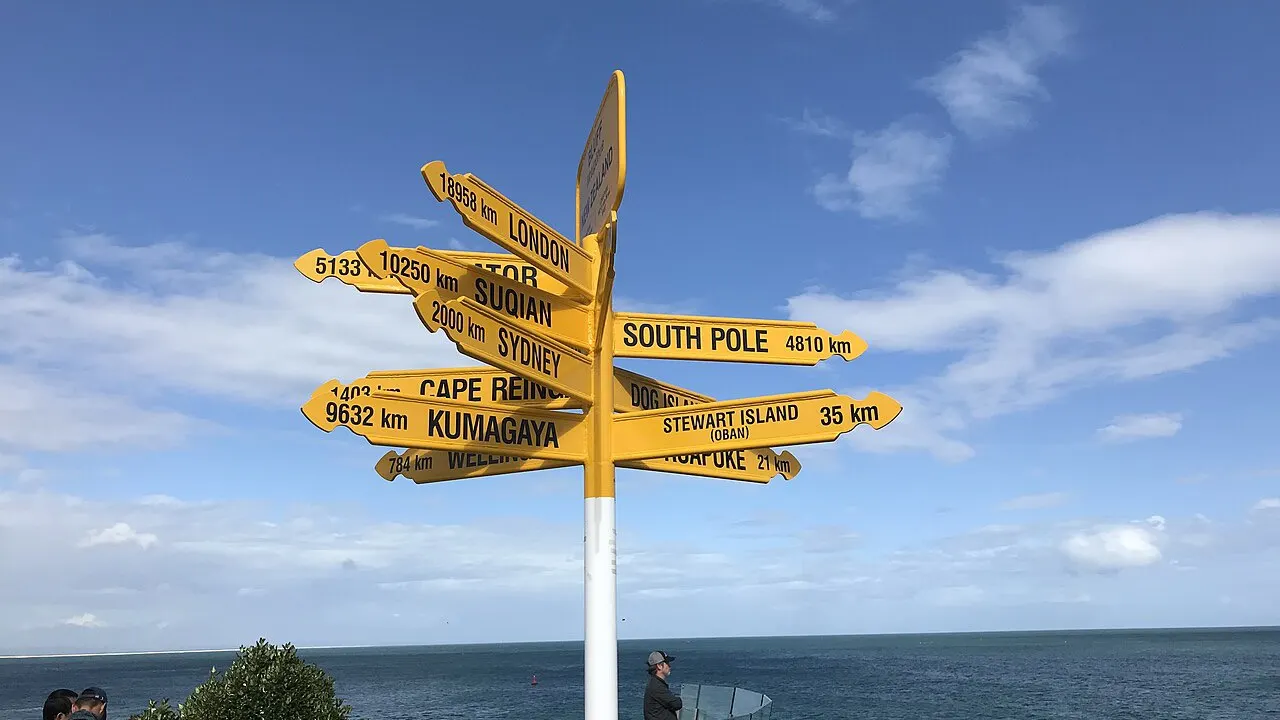
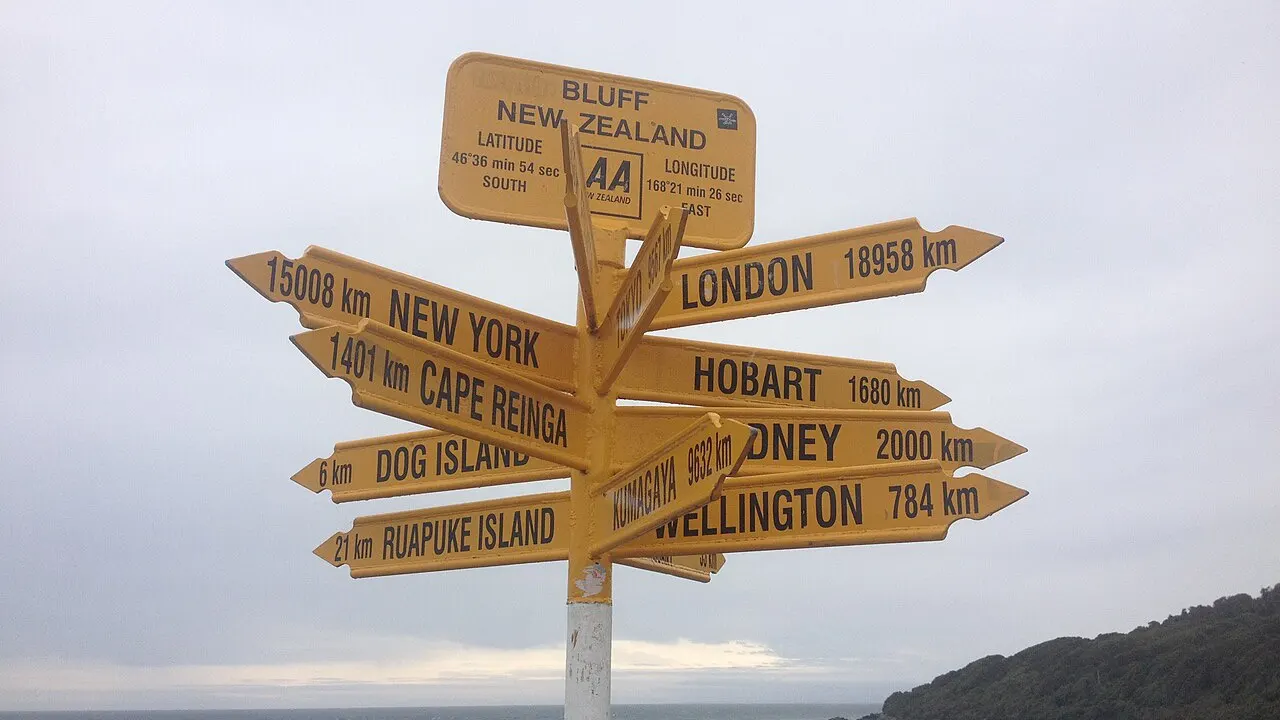
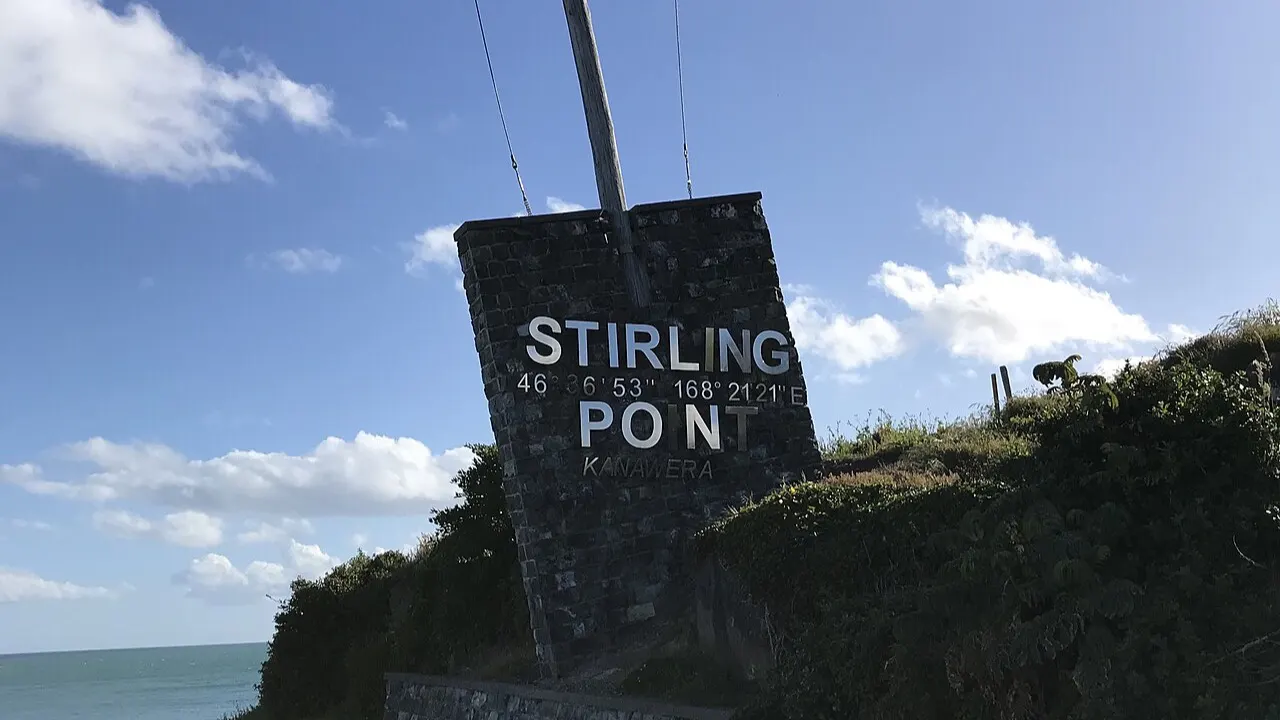
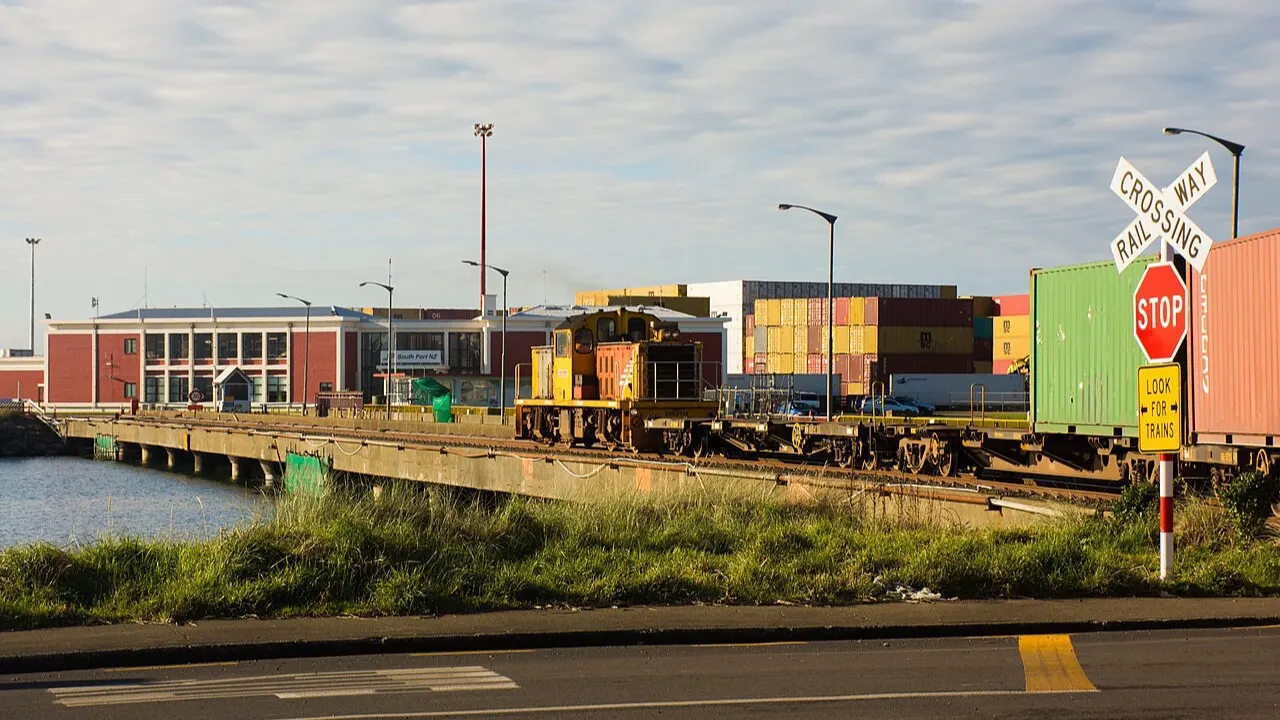
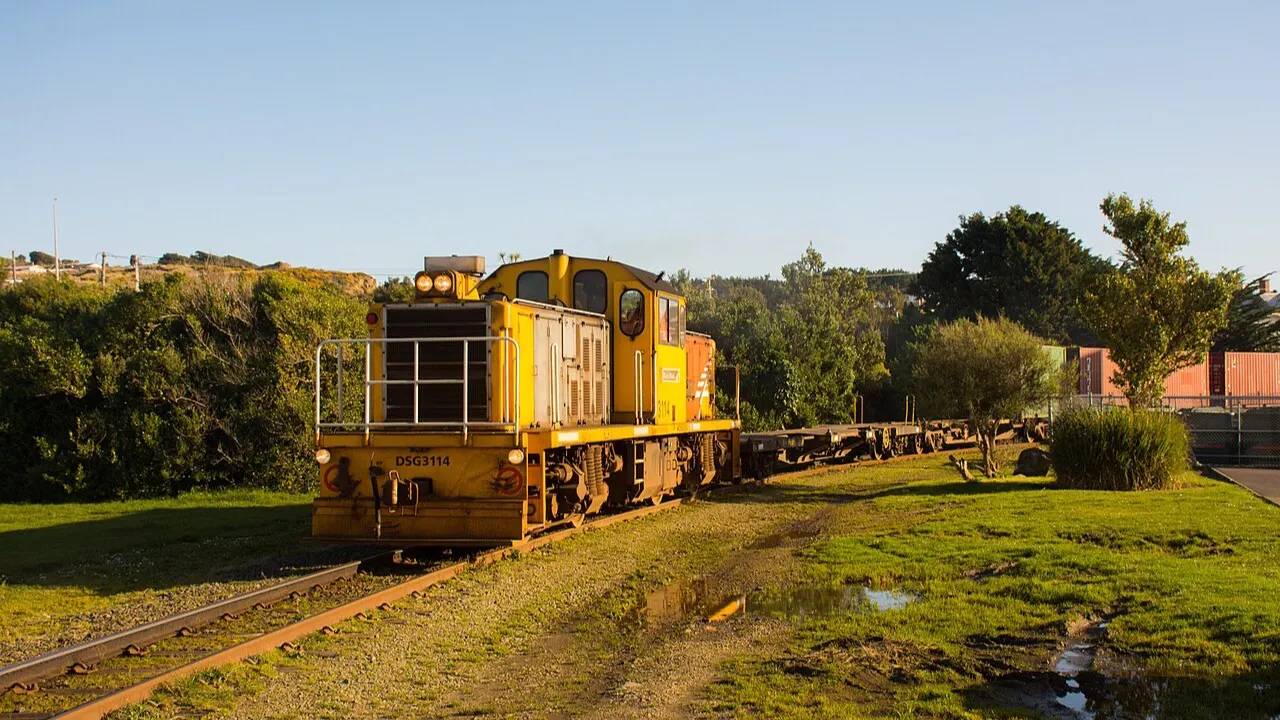
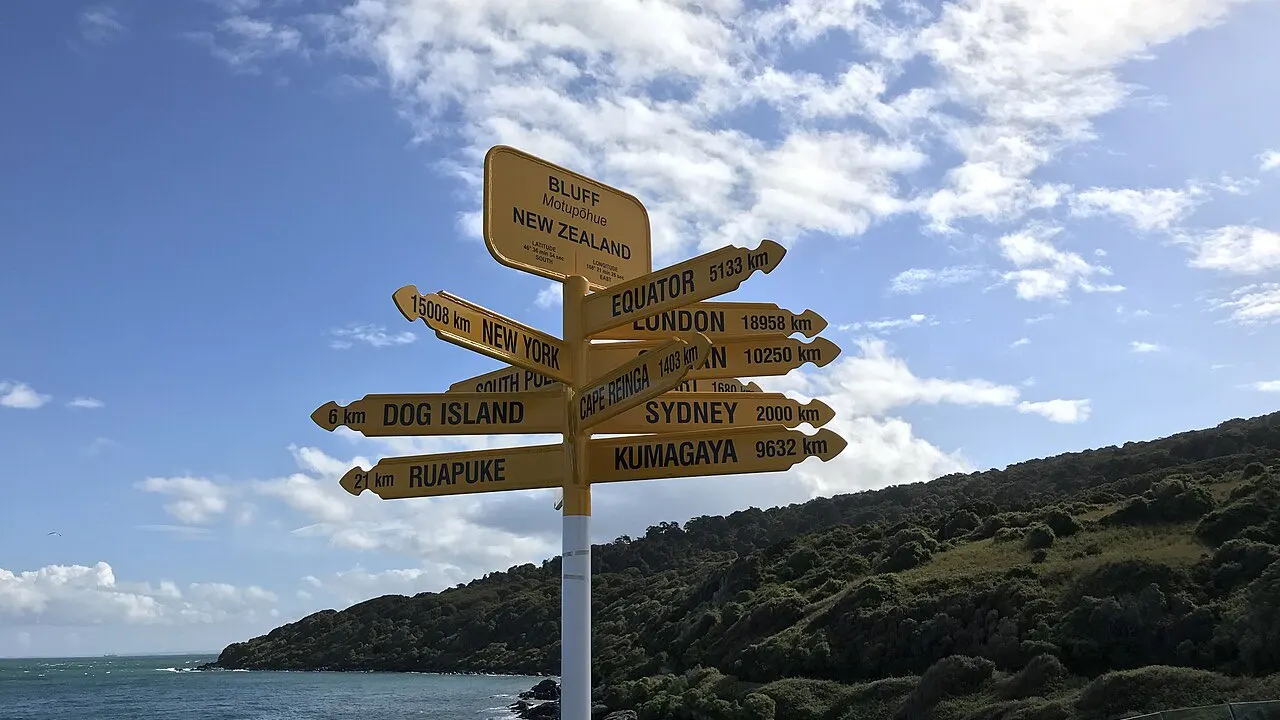
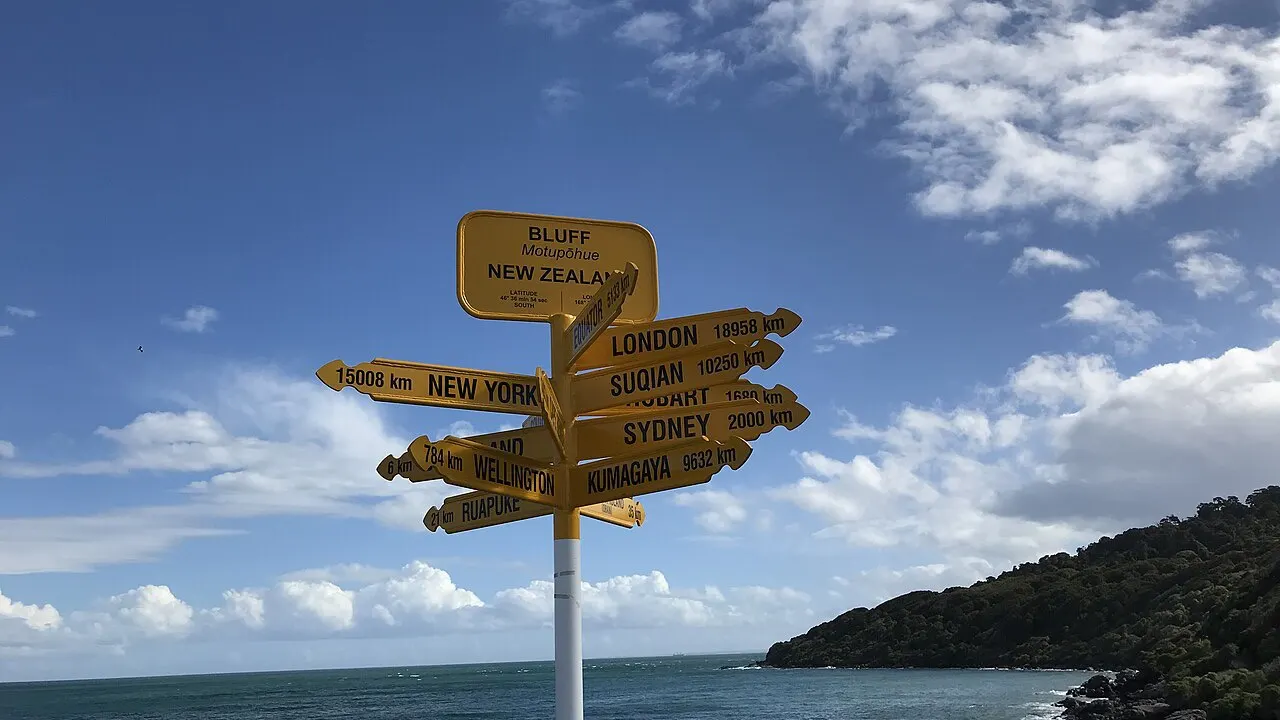
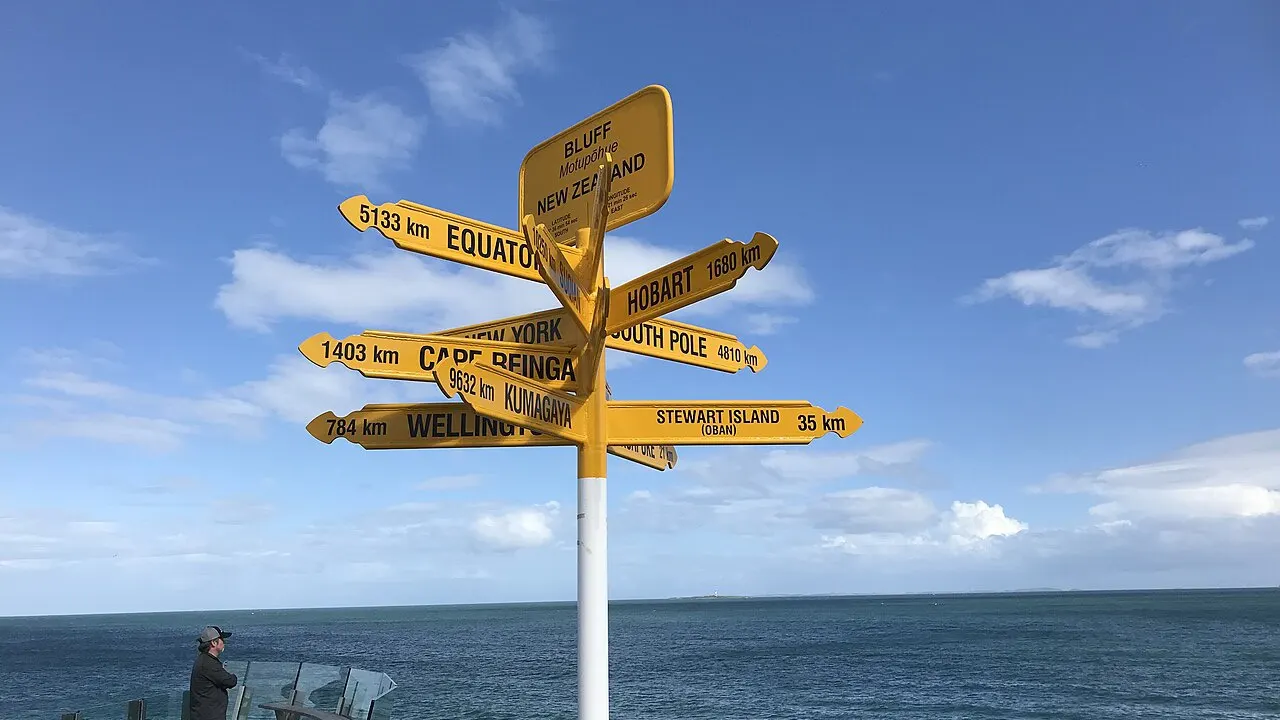
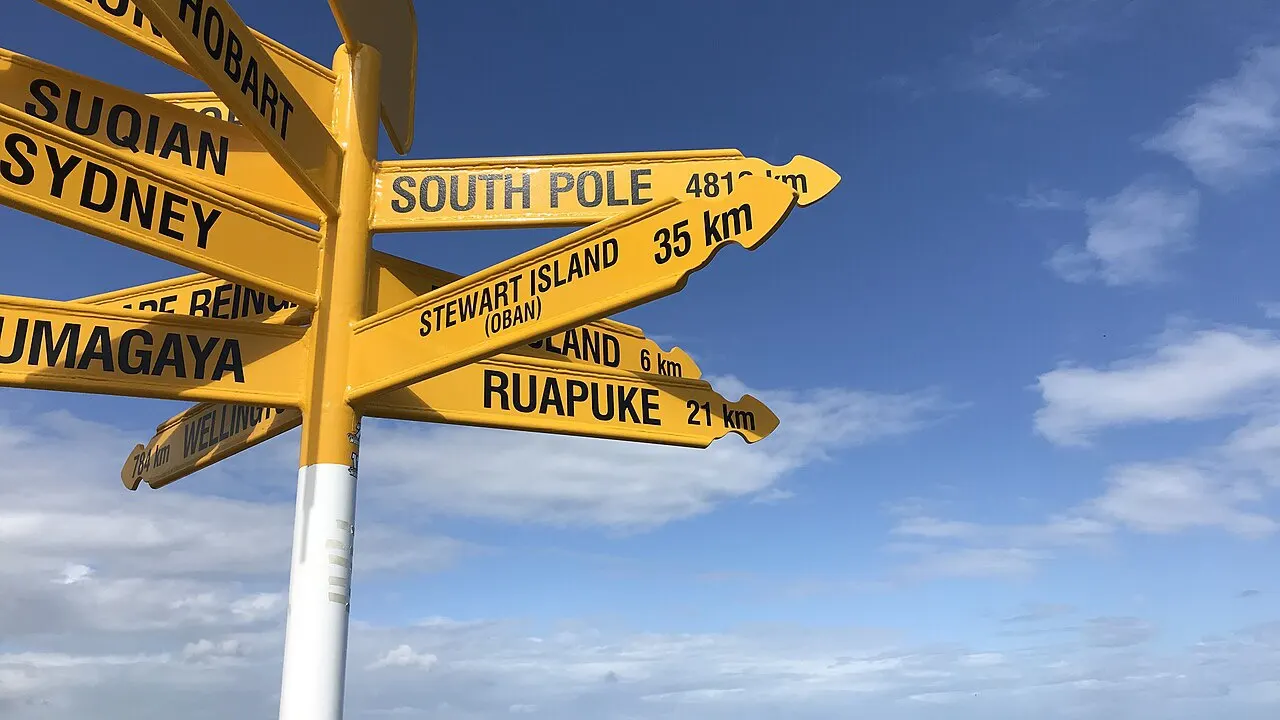
Photo credits: Julien Carnot (CC BY-SA 2.0); Schwede66 (CC BY-SA 4.0); Vanderplateza (CC BY-SA 4.0); Kevin Prince (CC BY-SA 2.0)
Getting there
Stirling Point sits at the end of the Bluff peninsula, 30 km south of Invercargill, and marks the official southern terminus of State Highway 1 — the highway ends one kilometre south of Bluff township at this point. Bluff is mainland New Zealand's southernmost town and is reached by road from Invercargill, at the end of the historic Bluff Branch railway line (opened 1867).
Things to do nearby
From the signpost you can walk the shoreline path through native bush up Bluff Hill / Motupōhue (265 m), which shelters the town from westerly winds and rewards with harbour panoramas. Bluff township offers the Bluff Maritime Museum with its full-sized oystering boat Monica, and the harbour is the terminus for the twice-daily catamaran ferry to Stewart Island / Rakiura across Foveaux Strait. Across the channel lies Tiwai Point, site of New Zealand's only aluminium smelter.
Highlights
The famous signpost at Stirling Point shows the distance and direction to major cities and locations around the world, including the Equator and the South Pole — the ritual photo stop for road-trippers finishing State Highway 1. In windy weather waves crashing on the rocks are spectacular. On the coast near Bluff stands a chain sculpture symbolising the Māori belief that Stewart Island is anchored to the South Island. And of course: Bluff oysters, renowned nationwide, are best eaten fresh in town.
History & culture
Bluff (Māori: Motupōhue) was one of the earliest areas of European settlement in New Zealand: the ship Perseverance anchored at nearby Stewart Island in 1813 seeking flax trading, and a whaling station was established by William Stirling around 1836. The town, officially Campbelltown from 1856 and a borough in 1878, was renamed Bluff in 1917; many streets bear names of Irish rivers. Ngāi Tahu's Awarua Rūnanga maintains Te Rau Aroha marae here, with the Tahu Potiki wharenui.
Booking & rules
Stirling Point is a free, open roadside attraction with no booking required, best visited in daylight and calm weather. Bluff's oceanic climate stays mild year-round — winters rarely drop below freezing, summers seldom exceed 25 °C — though wind and rain are common (around 1,070 mm annually). Time a visit with the annual Bluff oyster festival or a Stewart Island ferry sailing; the town also hosts the Foveaux Strait oyster fleet.
About this attraction
Stirling Point is where State Highway 1 formally runs out: the famous signpost lists distances to cities around the world, and road-trippers line up for the photo that ends the line. A chain sculpture and lookout platforms share the headland, where swell detonates against the rocks in any sort of weather, and the coastal track continues over towards Bluff Hill with strait and harbour views. Bluff itself is famous for oysters and fish and chips, so the classic routine writes itself — signpost photo, headland walk, then seafood in town. It is the ritual full stop at the bottom of the South Island.
Highlights
Photograph the famous signpost with its world-city distances, walk the headland track towards Bluff Hill for strait views, watch ferries and fishing boats come and go, and finish with Bluff oysters or fish and chips in town.
Cautions
The headland is exposed — wind can be ferocious; stay back from cliff edges in swell, and the coastal track gets slippery when wet.
Getting there
At the southern end of Bluff township, about 30 minutes' drive south from Invercargill, with a car park at the point.
noda attraction index 82
4.1 / 5
How the attraction index works
Each attraction is scored from five verifiable data points, out of 100. This is an editorial index, not a user rating — it reflects how free, how scenic and how well documented a place is, not anyone's personal experience.
| Free bonus | 20 pts | Completely free 20; small fees (parking, gold-coin koha) 10; expensive tickets 0. |
|---|---|---|
| Scenery uniqueness | 25 pts | World Heritage or landmark-level 25, regional 18, local 12 — each listing is explicitly tiered. |
| Things to do | 20 pts | Ranked by the depth of the highlights write-up: full 20, medium 14, brief 10. |
| Information completeness | 20 pts | 15 for having about, best time, cautions and access notes, minus 4 per missing item; plus 5 for two or more official sources. |
| Accessibility | 15 pts | Reachable by car 15, short walk 12, long tramp required 6. |