Orokonui Ecosanctuary




Photo credits: Pseudopanax at English Wikipedia (Public domain)
Getting there
Orokonui Ecosanctuary, known in Maori as Te Korowai o Mihiwaka, lies in the Orokonui Valley between Waitati and Purakaunui, about 20 kilometres north of central Dunedin. The visitor centre sits at the top of the valley on a road linked to Blueskin Road, Port Chalmers, Waitati, Dunedin and State Highway 1. The winding hill road calls for slow, careful driving.
Things to do nearby
Self-guided walking tracks range from 20 minutes to 5 hours. From the valley, Blueskin Bay and the coastal settlements of Waitati and Purakaunui are close by, and Port Chalmers is an easy detour. Guided walks take visitors to the kiwi pens and the wetland where takahe forage.
Highlights
A 9 km pest-exclusion fence, 1.9 m high with a steel hood and buried mesh skirt, keeps out stoats, ferrets, cats, possums, rats and even mice across 307 hectares of regenerating forest. Kaka feed so close at the feeding stations you can almost touch them; tuatara (15 moved from the University of Otago in 2009), South Island saddleback, robins and the breeding takahe pair Quammen and Paku all live inside. The tallest measured tree in New Zealand, the 82.25 m Frank Pepers Eucalyptus, also stands here.
History & culture
The idea was raised in 1982 and the Otago Natural History Trust formed in 1983; the Wellington sanctuary's 1995 opening revived the project. Local Runaka Kati Huirapa of Puketeraki became supporters. The valley formerly held Orakanui College and later a government 'inebriates' home', then was grazed and partly planted in eucalypts. The sanctuary opened in 2007, funded by public appeals including a 'sponsor a fencepost' campaign and donations of soon-to-be-withdrawn 5-cent coins.
Booking & rules
The sanctuary is open all year, welcoming around 25,000 visitors annually. Entry is by ticket at the visitor centre; guided tours can be booked through the sanctuary. The NZD 1.9 million visitor and education centre is a showpiece of environmentally sustainable design and includes a cafe. Visitors use airlock-style double gates, and pets must stay outside the fence.
About this attraction
Orokonui wraps a Dunedin-side valley in a predator-proof fence, shutting out stoats, possums and rats so the forest can sing again — a mainland island where takahe stalk the wetlands, kaka parrots crowd the feeding station and kiwis roam unseen by day. Visitors enter through the visitor centre and explore on self-guided tracks or join guided walks to the kiwi pens and takahe wetlands; the conservation story here has measurably boosted wild birdlife across the surrounding district. Half a day suits the visit, tickets cover entry and tours per the official site, and the drive in winds through hill farmland.
Highlights
Walk inside the predator fence past takahe wetlands, meet kaka parrots at the feeding station, join a guided kiwi-themed tour, and listen to a forest that has found its voice again.
Cautions
Open and close the gates exactly as instructed — the fence is the whole sanctuary; never feed the birds your own food or play audio; tour sessions need booking, and tracks are slippery after rain.
Getting there
North of Dunedin toward Waitati, a 25-30 minute winding drive from the centre; eco-tour shuttles also visit.
noda attraction index 62
3.1 / 5
How the attraction index works
Each attraction is scored from five verifiable data points, out of 100. This is an editorial index, not a user rating — it reflects how free, how scenic and how well documented a place is, not anyone's personal experience.
| Free bonus | 20 pts | Completely free 20; small fees (parking, gold-coin koha) 10; expensive tickets 0. |
|---|---|---|
| Scenery uniqueness | 25 pts | World Heritage or landmark-level 25, regional 18, local 12 — each listing is explicitly tiered. |
| Things to do | 20 pts | Ranked by the depth of the highlights write-up: full 20, medium 14, brief 10. |
| Information completeness | 20 pts | 15 for having about, best time, cautions and access notes, minus 4 per missing item; plus 5 for two or more official sources. |
| Accessibility | 15 pts | Reachable by car 15, short walk 12, long tramp required 6. |
Things to do nearby · Events
- Mike Crawford: He Kāhui Tōriki (2026) Solo & Layers Group
- Katharticus Album Release Party - Dunedin
 The Great Solar System Adventure
 The Big Lebowski
 Grand Opening – The Great Solar System Adventure
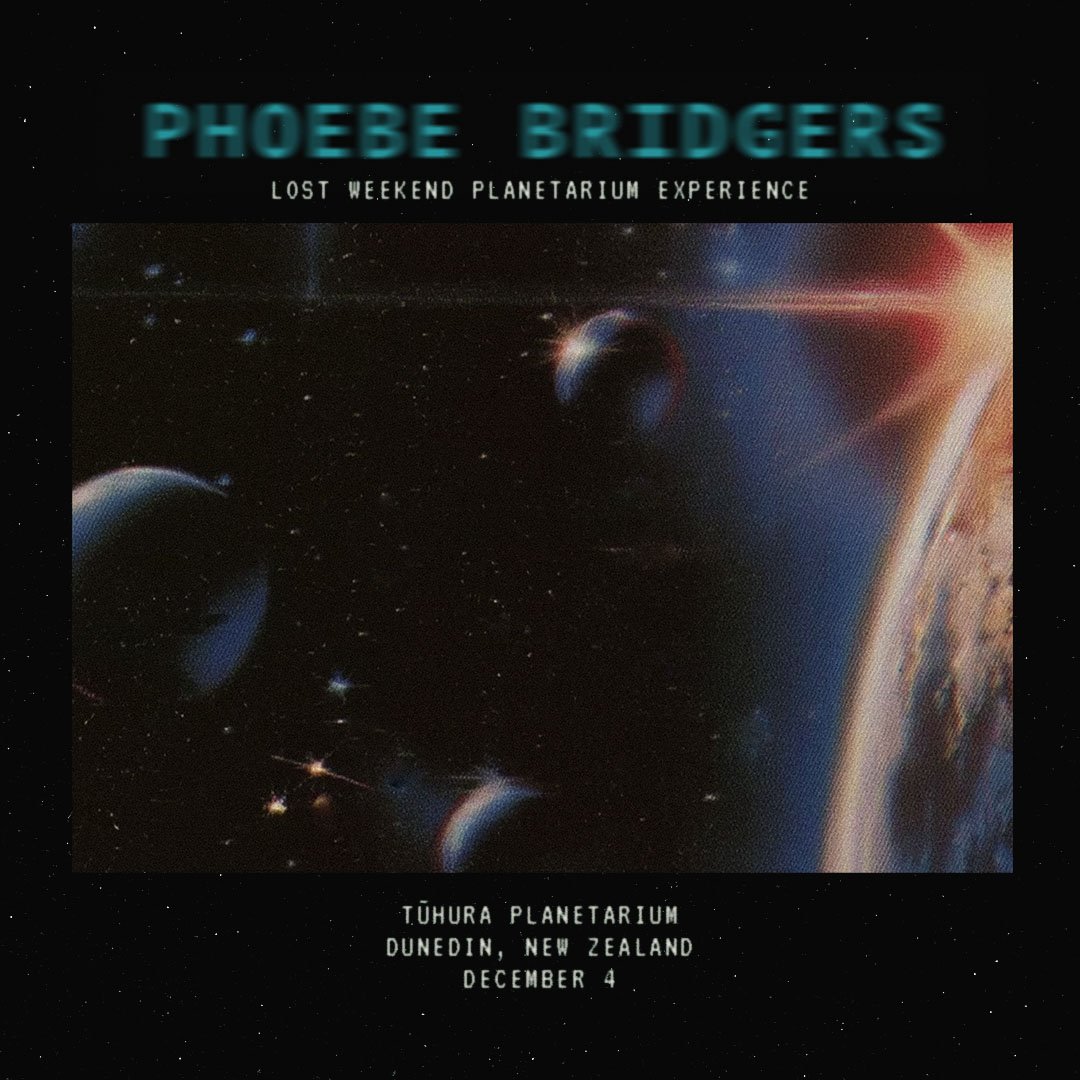 Phoebe Bridgers: Lost Weekend Planetarium Experience
 Ngā Waka Whiria: Hauora and Leadership in Construction
 Wahine Toa - Womens Adventure Film Festival