Everything is for the Best, in this Best of all Possible Worlds
Where: Everything is for the Best, in this Best of all Possible Worlds, Maps
Getting there
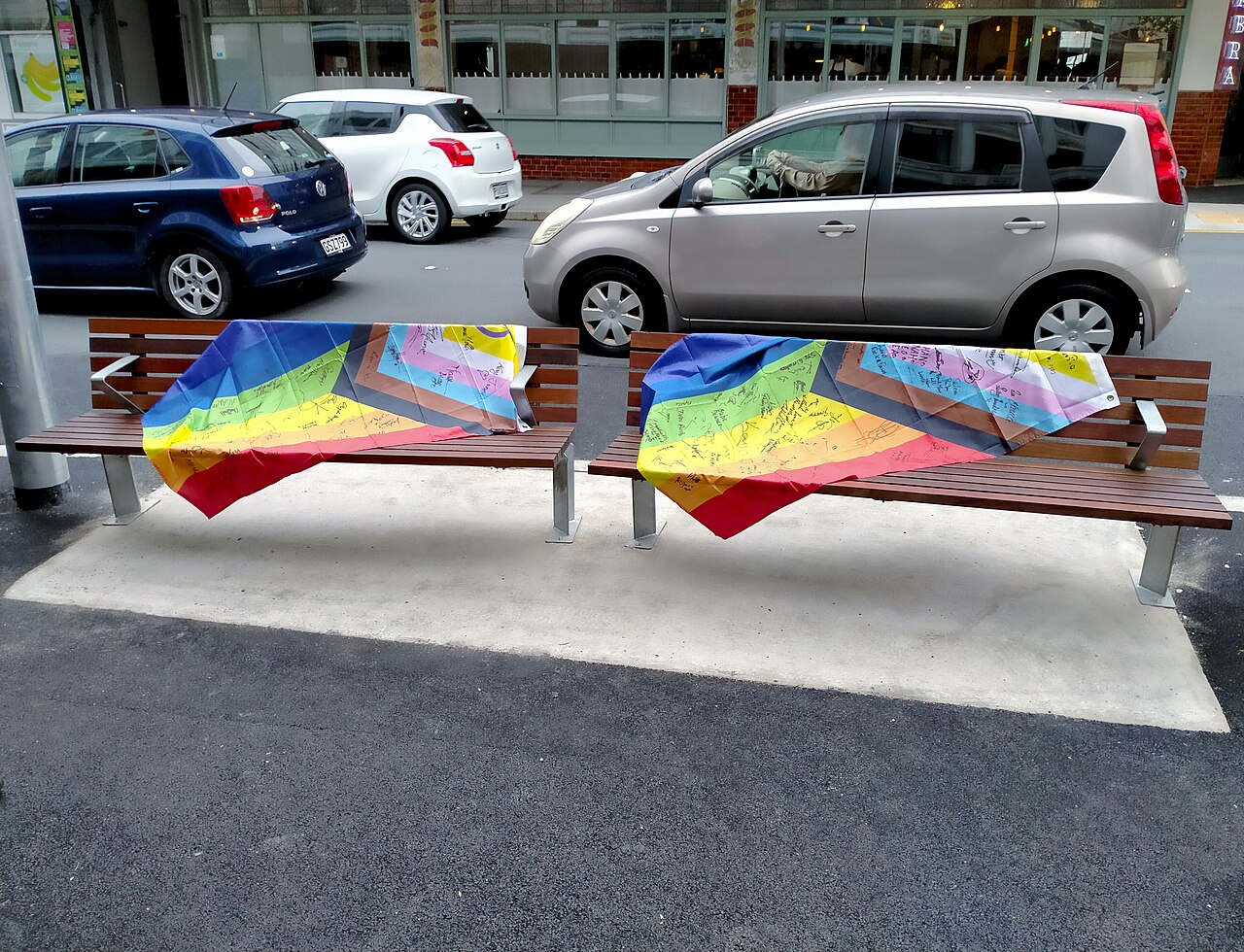
This work takes its title straight from Voltaire's satire of Leibnizian optimism in Candide — 'all is for the best in the best of all possible worlds'. The artist translated that famous philosophical jibe into a public artwork standing in an open civic space in Wellington's central district, set against glass-fronted office towers, passing pedestrians and busy streets. It is free to view and visible at all hours, and belongs to the city council's long-running public art programme, whose pieces are scattered across the central city's streets, squares and waterfront.
Things to do nearby
The work sits within walking distance of civic squares, the waterfront promenade and the shops and cafés around Lambton Quay, so it pairs easily with a stroll through the capital's core. Nearby streets frequently host markets and street performers in the warmer months, and the surrounding block offers plenty of coffee stops for resting after photographing the piece.
Highlights
Its distinctiveness lies in delivering a serious philosophical proposition with light humour, inviting hurried passers-by to weigh the tension between fate, optimism and reality: if everything really is for the best, how should an overcast day, a queue or traffic be read? That ironic question is Voltairean wit at work, lifting the piece above ordinary street decoration into a footnote to Wellington's intellectual, self-deprecating character. Rendered as a combination of text and image, it reads differently under the capital's changeable daylight and glows among city lights at night; Wellington's notorious winds, with pedestrians battling past, only sharpen the irony.
History & culture
The title directly quotes Voltaire's novel Candide and its famous mockery of Leibniz's optimism, carrying eighteenth-century European philosophy into a twenty-first-century streetscape. Rather than standing solemn like a monument, it addresses the street in a near-playful tone, letting philosophy step out of books into everyday experience; even visitors who have never read Voltaire may find a smile or a moment's reflection in the line alone.
Booking & rules
No booking or fee is involved — the work is outdoors and available at all hours. Wear comfortable shoes, as the central city is partly pedestrianised with gentle slopes, and allow about half an hour for viewing, photographs and a coffee nearby. Weather changes the mood considerably: spring and summer streets are liveliest with markets and performers, while autumn and winter sea winds lend the piece a bleaker philosophical air, so revisiting in different conditions is rewarding.
Source: https://www.openstreetmap.org/node/2634618307