Bay Oval ground dimensions: How long is the boundary in meters at cricket ground in Tauranga?
Bay Oval ground dimensions: How long is the boundary in meters at cricket ground in Tauranga?
Deepanjan Mitra
•
BCCI/Creimas
Add Sporting News on Google
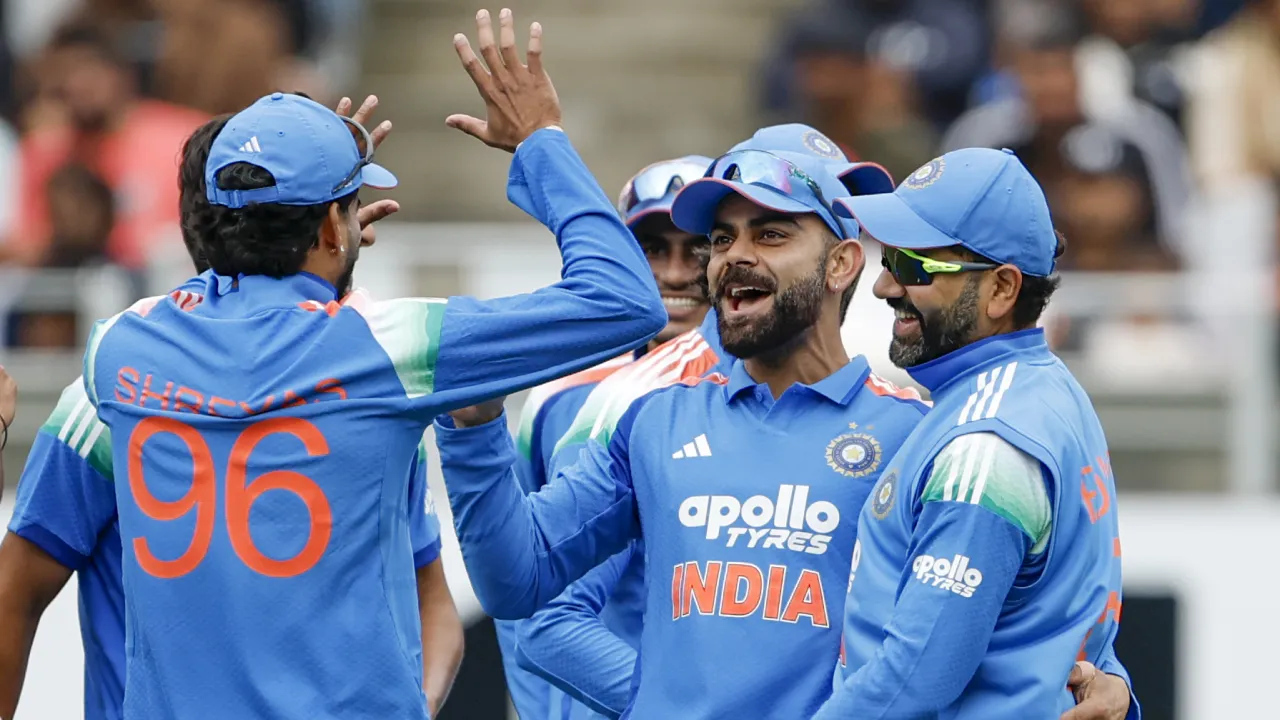
India’s batting stars get a quick chance to answer their critics on Sunday as the fifth and final ODI is at the same Bay Oval ground where they were bundled out for 89 only two days earlier.
Rohit Sharma and Virat Kohli both fell without scoring in Matt Henry’s first over on Friday, and captain Shreyas Iyer followed him back to the pavilion.
Rohit at least has happy memories of this venue, as he made 87 and 62 when India won both of their 2019 ODIs here, and he remains India’s leading run-scorer at the ground.
India will also be without Shubman Gill and KL Rahul, so the batting order will rely heavily on its senior pair. Conditions are expected to help the seamers again, and a quick start from the top three could decide how Iyer’s side finishes a series they have already made safe.
A WELCOME BONUS OF 200%. PLACE YOUR BETS NOW ON DAFABET
Unlike some of the country's traditional multi-purpose rugby arenas, Bay Oval was purpose-built for cricket, offering an aesthetically pleasing layout set against the backdrop of Mount Mauao.
Add The Sporting News as a preferred news source
Bay Oval, Tauranga quick facts
The ground features grass embankments wrapping around the playing surface, providing an ideal environment for day-night encounters under its permanent light towers.
Batters often enjoy the consistent bounce on offer, while the quick outfield rewards well-timed shots through the infield. However, the sea breezes coming off the coast frequently introduce an additional variable for bowlers to contend with during late afternoon and evening sessions.
With an inviting playing surface and fair dimensions, teams batting at Bay Oval usually target the shorter boundary pockets to push match totals well past competitive par scores.
Feature
Detail
Shape
Symmetrical circular-oval with grass embankments
Crowd capacity
Roughly 10,000 to 12,000
Opened
2005 (First recorded match in 2007)
Location
Blake Park, Mount Maunganui, Tauranga
First Test
2019 (New Zealand vs England)
Pitch
Natural clay turf offering true bounce and good carry
Outfield
Lush and fast, surrounded by open embankments and picket fencing
Bay Oval dimensions: What shape is the ground?
Bay Oval is a well-proportioned, symmetrical ground built specifically for cricket, making its dimensions far more balanced than Auckland’s rectangular Eden Park layout.
The venue boasts standardized boundaries that conform to ICC limits, with maximum dimensions extending up to 70 meters from the center of the pitch. The estimated boundary measurements below can vary slightly based on pitch placement for specific matches.
Boundary area
Distance (metres)
What it means for the game
Straight (long-on and long-off)
~68 to 72 m
Standard length straight boundaries requiring clean power to hit over the rope.
Square of the wicket (point and deep cover)
~65 to 68 m
Fairly sized square boundaries where stroke-makers can score heavily with square cuts and drives.
Mid-wicket and cow corner
~65 to 70 m
Primary scoring zone for batters targeting pull shots and slog-sweeps.
Behind the wicket (third man and fine leg)
~58 to 62 m
The shortest arc of the ground, making scoops, upper-cuts, and ramps high-yield options.
Straight boundary distance at Bay Oval
Straight down the ground towards long-on and long-off, the boundary distance measures roughly 68 to 72 metres from the pitch centre. Because these straight limits are international standard size, lofted hits down the ground require solid connection to clear fielders stationed on the boundary rope.
Square boundary length at Bay Oval
Square of the wicket around deep point and cover, the boundaries sit at approximately 65 to 68 metres. The true bounce of the Bay Oval pitch allows batters to play square of the wicket with confidence, though the fast outfield ensures that even grounded shots often reach the fence.
Mid-wicket boundary distance
Towards the mid-wicket and cow corner region, the rope is positioned around 65 to 70 metres from the centre. This represents a prime scoring sector during white-ball matches, though crosswinds coming off the nearby coast can significantly alter ball flight on high shots.
Shortest boundary behind the wicket
The shortest boundaries at Bay Oval are located behind the stumps towards third man and fine leg, ranging between 58 and 62 metres. Batters frequently exploit these shorter pockets using deflection shots, ramps, and edges that fly over the infield.
Bay Oval capacity and seating
Bay Oval accommodates a crowd capacity of roughly 10,000 to 12,000 spectators. The venue is famous for its relaxed grass embankments that surround the majority of the playing field, alongside the modern Bay Oval Pavilion which houses players, officials, and hospitality members.
Deepanjan Mitra
Deepanjan Mitra is a content writer and editor based in India, with extensive experience working across a variety of sports. He combines a passion for storytelling with an ability to deliver insightful news, analysis, and feature stories and has previously worked for the likes of Sports Illustrated and Essentially Sports.