FROM WILDING PINES TO NATIVE FOREST: QUEENSTOWN'S TOURISM INDUSTRY GETS ITS HANDS DIRTY
This news was published over 30 days ago and may be outdated
Love Queenstown Planting Day 2026
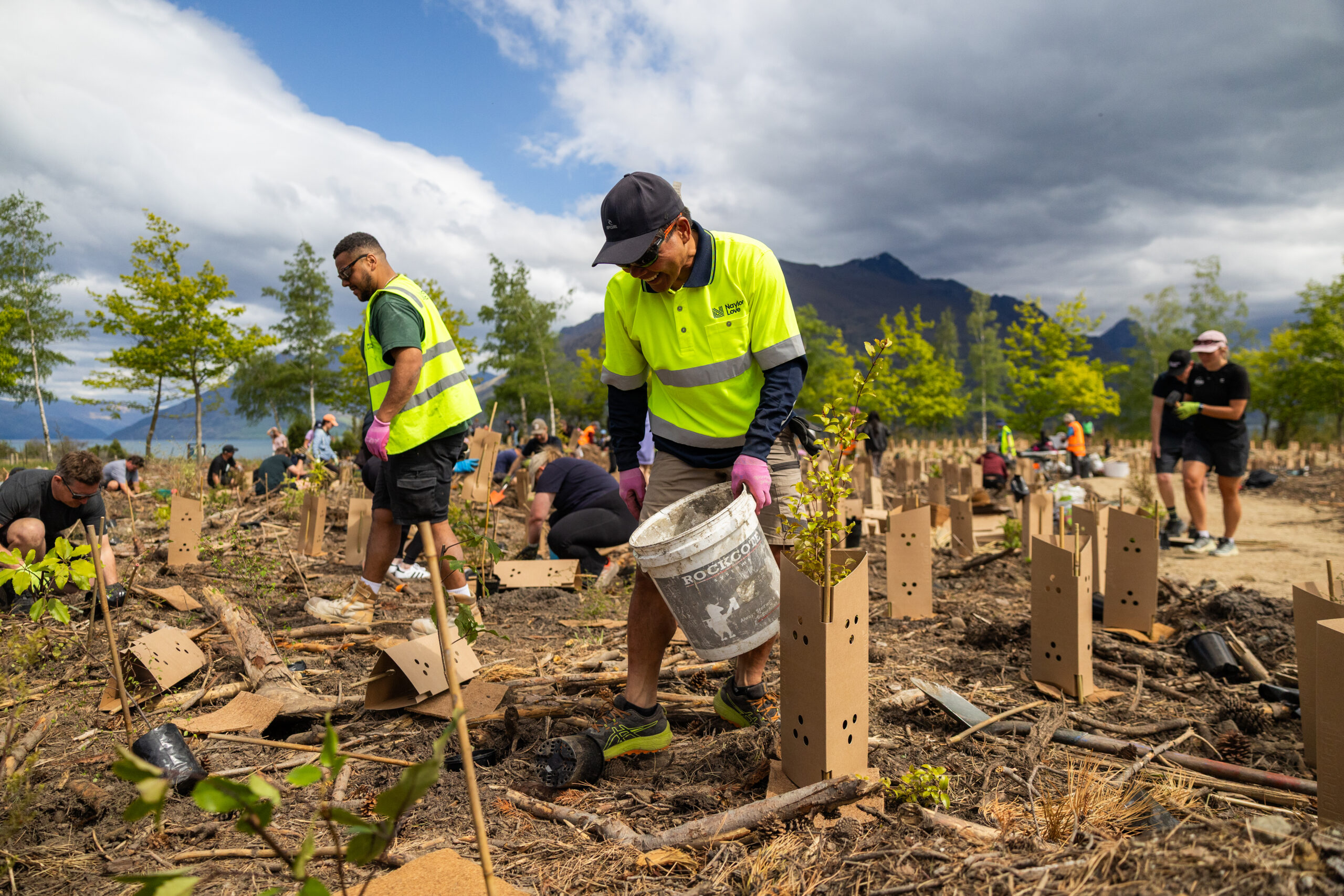
Just months ago, this patch of land overlooking Lake Whakatipu was covered in wilding pines. Now, thanks to a major volunteer effort involving Queenstown’s tourism industry, 3,000 native seedlings are taking root, part of a long-term plan to restore the area’s natural landscape.
More than 150 volunteers swapped their usual working day for shovels, compost and muddy boots on 22 October, joining forces at Jardine Park on Kelvin Heights to help turn a former wilding pine infestation into native forest.
The planting was the latest initiative organised by Love Queenstown, bringing together tourism operators, local businesses and conservation organisations in a restoration programme that has now seen more than 7,000 native trees planted at the site over three years.
What makes the project particularly interesting is the speed of the transformation. As recently as June, the ground was covered in mature wilding pines, trees that were not only dominating the local landscape but also contributing to the spread of invasive conifers across the surrounding mountains.
Love Queenstown Planting Day 2026
Their removal was coordinated by the Whakatipu Wilding Control Group and Queenstown Lakes District Council, clearing the way for the Whakatipu Reforestation Trust to begin restoring native vegetation.
The replacement trees are not simply ornamental. Mountain beech, podocarps and broadleaf species, grown from locally collected seed at the neighbouring community nursery, have been selected to help recreate the vegetation that once occupied the margins of Lake Whakatipu.
Whakatipu Reforestation Trust Operations Manager Sararose Brown says the scale and speed of the work would have been difficult without the combined effort.
“This patch was still covered in wilding pines in June. Getting those trees down, preparing the ground and having everyone here planting just a few months later is a wonderful result. Working together means we can do so much more.
“We’re planting mountain beech, podocarps and broadleaf species that once would have grown here on the lake margins, providing food and habitat for wildlife. In 20 years, people will be walking beneath these trees with birds above them. That’s a lovely thing to help create.”
default
Love Queenstown Planting Day 2026
The work also addresses a much larger conservation problem facing the Southern Lakes region. Wilding conifers have spread across significant areas of the high country, threatening native ecosystems, changing landscapes and creating an expensive, ongoing control challenge.
Padraic Prendergast, Skyline Queenstown Sustainability Coordinator and Wilding Control Group Volunteer Coordinator, says the mature pines at Jardine Park were contributing to that problem well beyond the immediate site.
“Those mature trees were sending seed beyond the park, including towards the Remarkables and across the lake to Cecil Peak. There hasn’t been a cone-producing wilding on Cecil Peak since 2015, but we’re still removing thousands of trees there because seed keeps blowing across.”
Removing established seed sources is therefore an important part of preventing reinfestation, particularly in areas where years of control work have already reduced wilding populations.
The restoration is also beginning to show ecological results. Cryptic skinks have recently been discovered among earlier plantings, while Southern Lakes Sanctuary and Whakatipu Wildlife Trust are helping monitor wildlife returning to the area.
Love Queenstown Community Fund Coordinator Ash Bickley says the growing involvement of local businesses has been one of the most encouraging developments.
“We’ve been working alongside the Whakatipu Reforestation Trust for a number of years now, so it’s pretty special to see how far this work has come. More businesses are getting involved, wildlife is already being found among the young trees, and you can see what everyone’s efforts are adding up to.”
The project has also made use of material removed during clearance. Usable logs were recovered, while remaining timber was mulched or buried on site to support the establishment of new vegetation.
Although October’s planting marks the completion of the initial three-year partnership between Love Queenstown, the Whakatipu Reforestation Trust, Skyline and QLDC, work at Jardine Park is far from finished. Further planting, weed control and care for naturally regenerating native plants will continue as the young forest develops.
For Queenstown, where tourism depends heavily on the quality of the surrounding natural environment, the initiative is a practical example of an industry contributing directly to the landscapes that attract visitors in the first place.
The next challenge will be ensuring those 7,000 seedlings survive and develop into a functioning native forest. That will take years of maintenance, monitoring and continued community involvement, long after the volunteers have packed away their spades.
For information about future volunteer opportunities and restoration projects, visitloveqt.co.nz.
Adventure Magazine2 weeks ago
3663 minutes read
Share
Facebook
X
Share via Email