Aoraki / Mount Cook Village
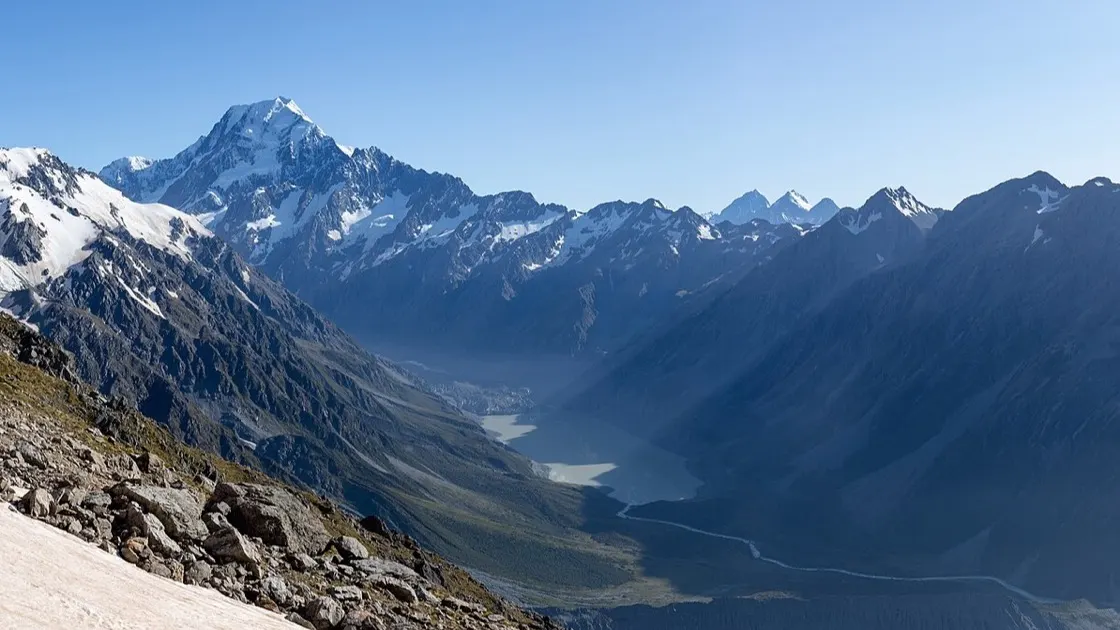
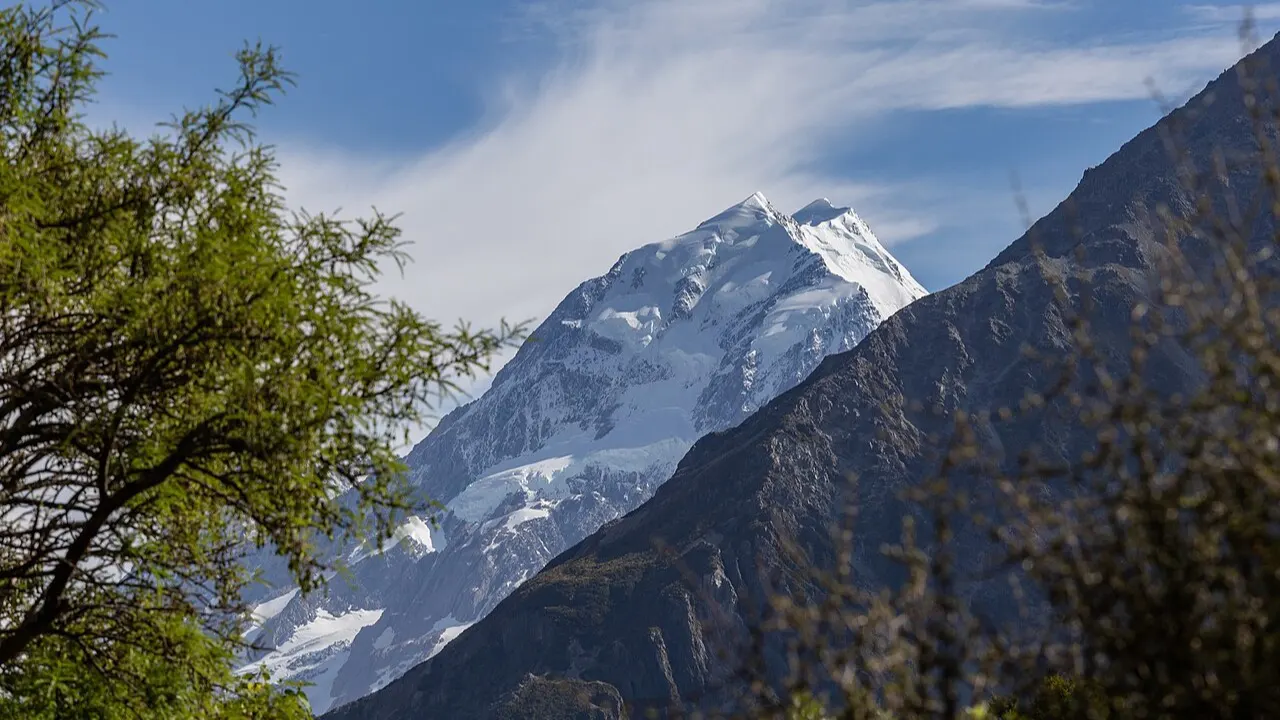

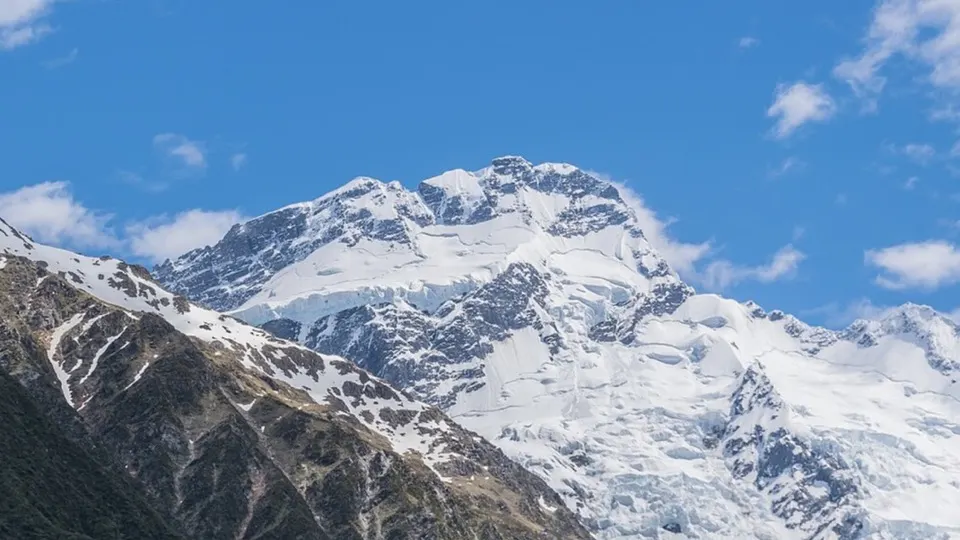

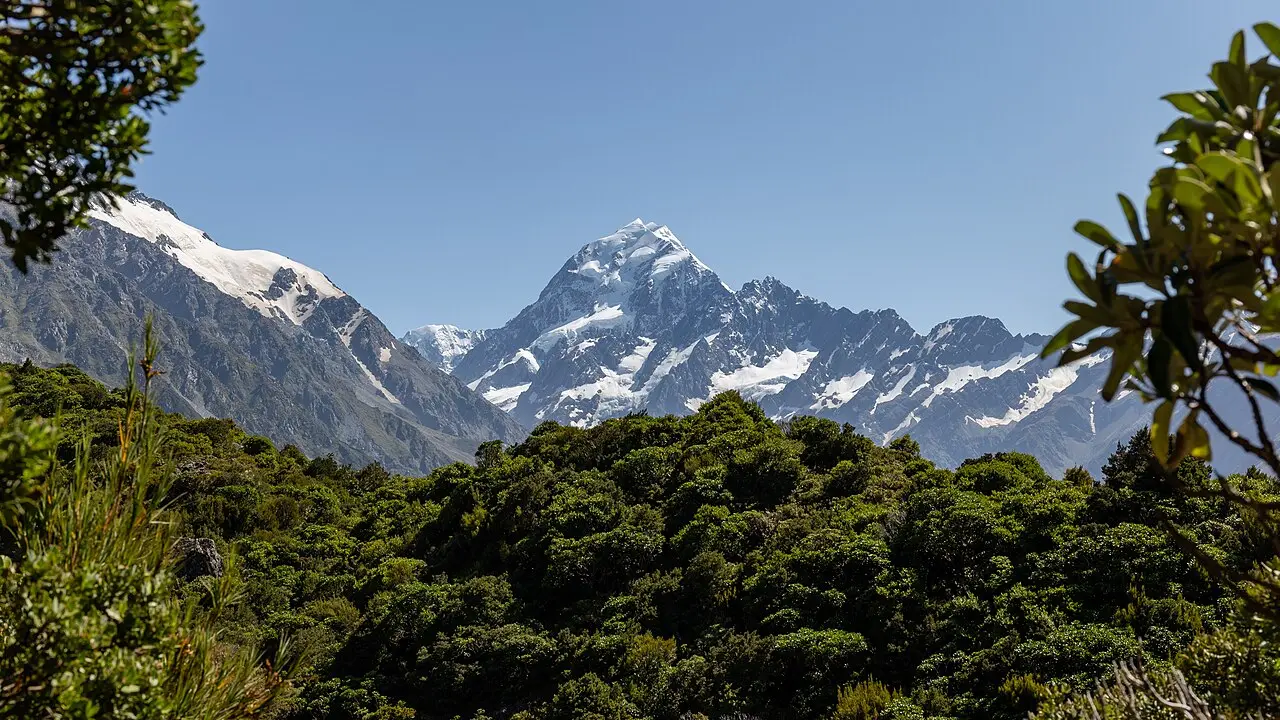
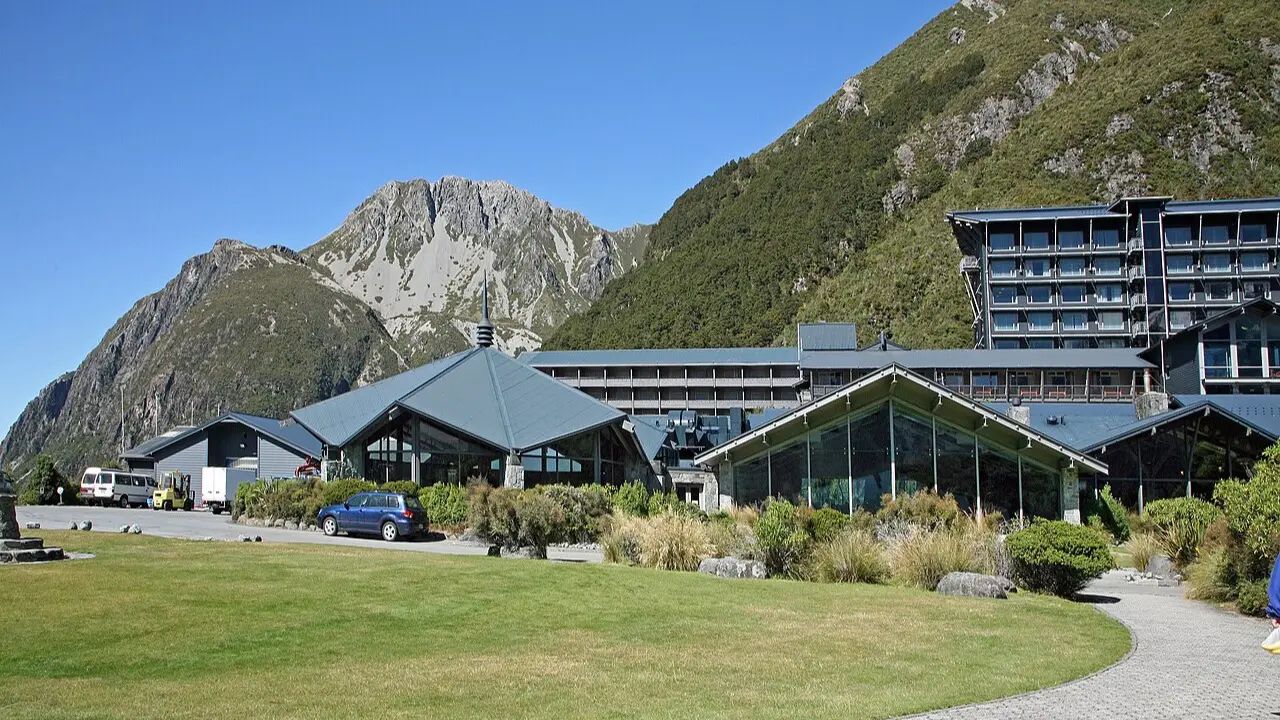
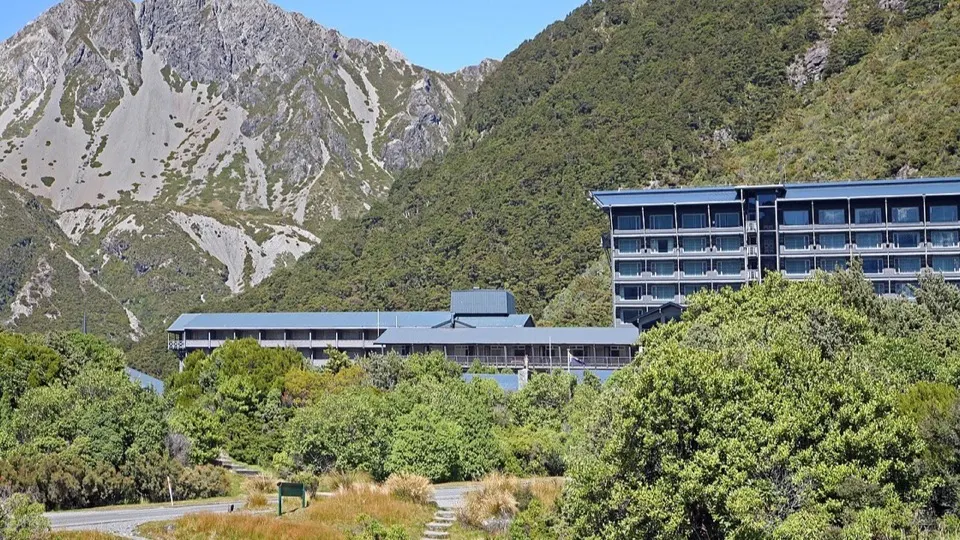
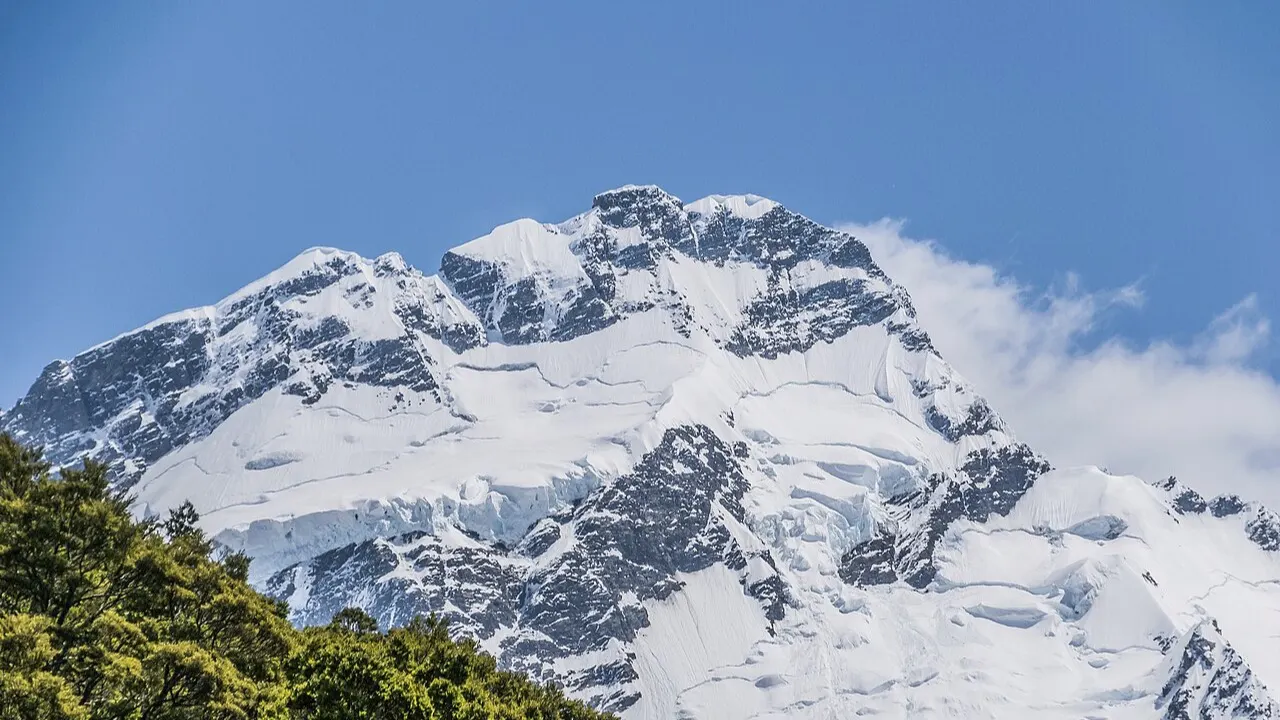
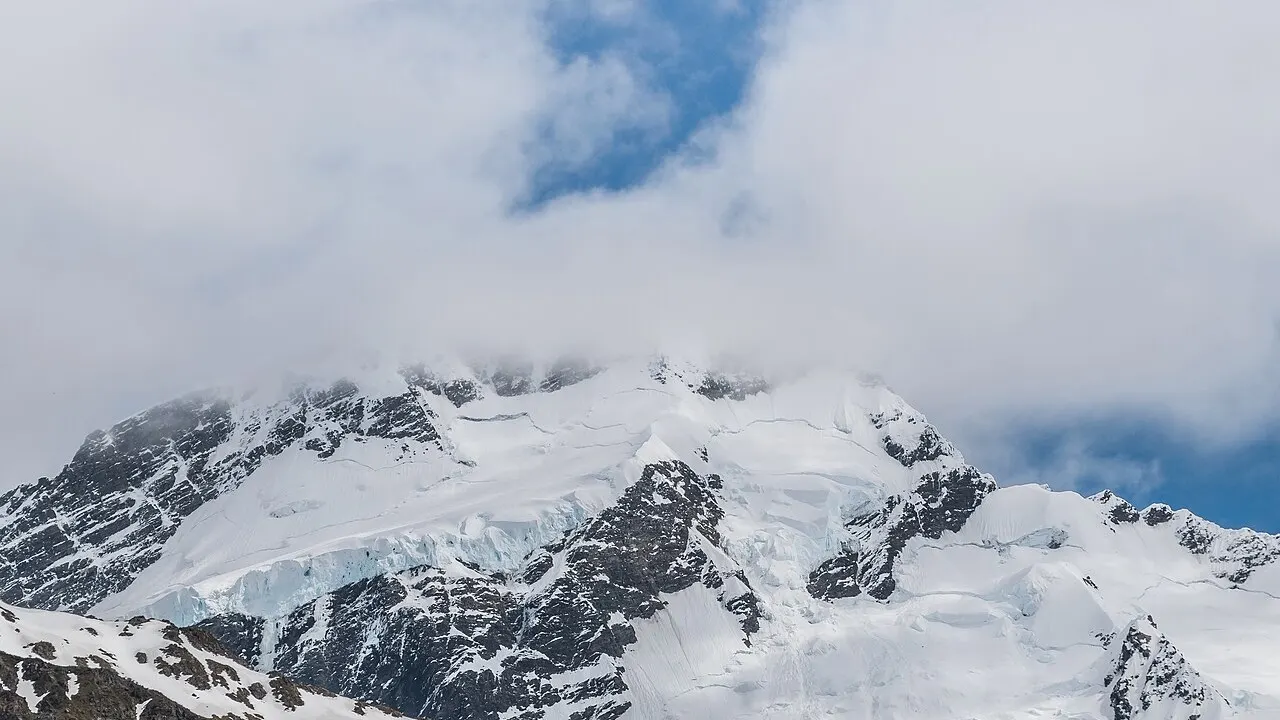
Photo credits: Michal Klajban (CC BY-SA 4.0); Pseudopanax at English Wikipedia (Public domain); Krzysztof Golik (CC BY-SA 4.0); W. Bulach (CC BY-SA 4.0)
Getting there
Aoraki / Mount Cook Village lies in Canterbury, South Island, at the foot of New Zealand's highest mountain within Aoraki / Mount Cook National Park. It sits 15 km south of the summit, 7 km from the end of the Tasman Glacier, and is reached via State Highway 80 along Lake Pukaki. On clear days the mountain is visible from most of SH 80 and SH 6 south of the lake.
Things to do nearby
Two valleys give the closest easy viewpoints: the Hooker Valley Track ends at a lookout only 10 km from the peak, with views of the whole mountainside and the Hooker Glacier's moraine lake. To the east, the Tasman Valley leads toward the Tasman Glacier and Tasman Lake. Nearby Lake Matheson on the West Coast offers the famous 'view of views' reflection of Aoraki / Mount Cook and Mt Tasman.
Highlights
Aoraki / Mount Cook, at 3,724 m after the 1991 rock and ice collapse, has three summits — Low, Middle and High Peak — whose connected ridge forms a distinctive blocky shape. The national park holds over 140 peaks above 2,000 m and 72 named glaciers covering 40% of its 700 sq km, and together with neighbouring parks forms a UNESCO World Heritage Site. Alpine plants such as snow tussock cling up to 1,900 m.
History & culture
In Ngāi Tahu tradition, an early name for the South Island is Te Waka o Aoraki ('Aoraki's Canoe'). Captain John Lort Stokes named Mount Cook in 1851 for James Cook, who never saw the peak. The first ascent was made on 25 December 1894 by New Zealanders Tom Fyfe, Jack Clarke and George Graham; Freda Du Faur was the first woman (1910) and George Bannister the first Māori (1912). Sir Edmund Hillary made his first ascent in January 1948. Under the Ngāi Tahu Claims Settlement Act 1998, the dual name Aoraki / Mount Cook was adopted — the only such name with the Māori name first.
Booking & rules
The village, a small tourist centre and base camp for the mountain, consists of a DOC visitor centre, hotels and trackheads. The mountain itself is a serious mountaineering objective (easiest route: Linda Glacier) with rapidly changing weather — heavy orographic precipitation, and temperatures at the base from −13 °C to 32 °C. Watch for rockfall and, in winter, occasional icy roads. Accommodation and dining are limited and book out early in peak season.
About this attraction
Aoraki / Mount Cook Village sits beneath the country's highest peak, ringed by the ice-crowned summits of a World Heritage national park. The village itself is compact — DOC visitor centre, hotel and trackheads — but the track network radiating from it is South Island gold: the Hooker Valley, the Tasman Glacier and the Sealy Tarns each deliver. Inside the dark sky reserve, clear nights stack stars over snow silhouettes. Alpine weather and rockfall deserve respect, winter roads occasionally ice over, and village beds and tables are scarce — book well ahead in season.
Highlights
Walk the Hooker Valley and glacier lookouts by day, read the mountaineering displays at the visitor centre, watch stars stack over snow silhouettes at night, and retreat to a café in cloud.
Cautions
Alpine weather flips fast — carry wind and rain layers even low; never linger under rockfall zones; carry chains when winter roads ice; book beds and tables ahead in season.
Getting there
About four hours by car from Christchurch or one hour from Tekapo on State Highway 80, with intercity coach service; every trackhead is walkable from the village.
noda attraction index 92
4.6 / 5
How the attraction index works
Each attraction is scored from five verifiable data points, out of 100. This is an editorial index, not a user rating — it reflects how free, how scenic and how well documented a place is, not anyone's personal experience.
| Free bonus | 20 pts | Completely free 20; small fees (parking, gold-coin koha) 10; expensive tickets 0. |
|---|---|---|
| Scenery uniqueness | 25 pts | World Heritage or landmark-level 25, regional 18, local 12 — each listing is explicitly tiered. |
| Things to do | 20 pts | Ranked by the depth of the highlights write-up: full 20, medium 14, brief 10. |
| Information completeness | 20 pts | 15 for having about, best time, cautions and access notes, minus 4 per missing item; plus 5 for two or more official sources. |
| Accessibility | 15 pts | Reachable by car 15, short walk 12, long tramp required 6. |
Things to do nearby · Events
 Korea Day 2026
 Junk Band Jam Workshop
 Pole Legends 2026
 Re-Percussion 2026
 The Mystic Muses at Christchurch Folk Music Club
 Vivaldi's Four Seasons Children's Interactive Concert - Summer
 Ngā Waka Whiria: Hauora and Leadership in Construction
 FREE Webinar | A Better Future for NZ Communities