'Not the way MMP was supposed to work': Experts urge politicians to act on overhang
18 November 2026, 9:33am
'Not the way MMP was supposed to work': Experts urge politicians to act on overhang
Russell Palmer
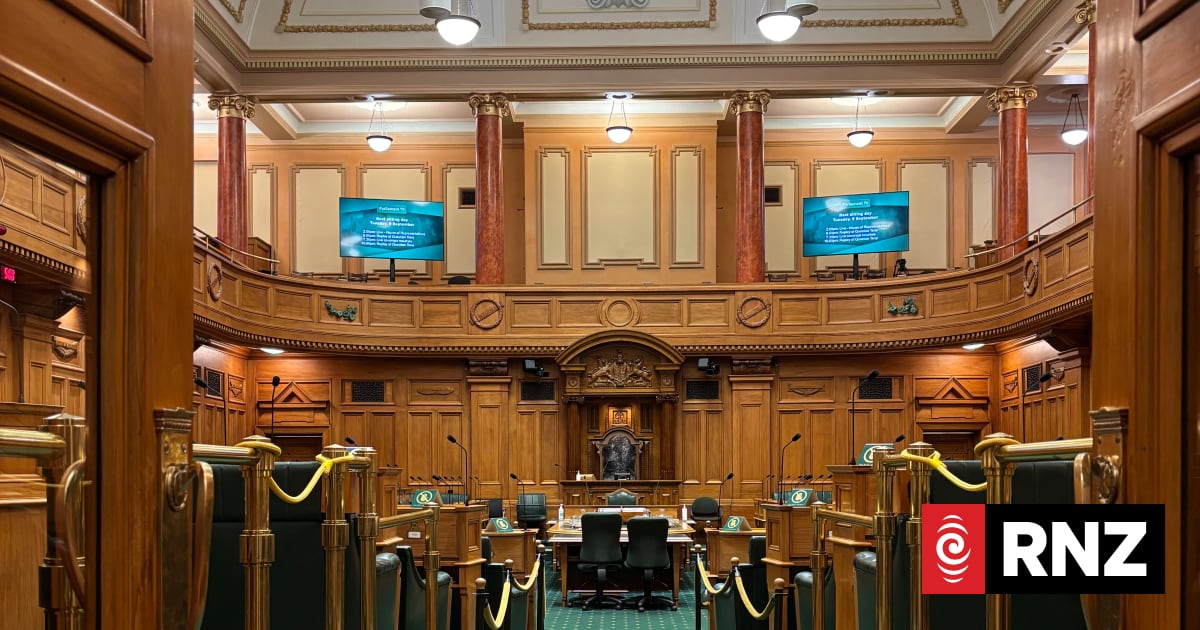
Caption:The initial election results point to an 11-seat overhang.
Audio player for "Weekly Political Panel: Antonia Modkova and Tania Waikato" removed for printing
Visit page to play audio: https://www.rnz.co.nz/news/eyJhbGciOiJIUzI1NiJ9._v0.KrRTFtoPsaA8nSDloPZ4KejQJr59ANQpD9ULgGwzaM0/politics_election-2026/2646499%2Fnot-the-way-mmp-was-supposed-to-work-experts-urge-politicians-to-act-on-overhang
Weekly Political Panel: Antonia Modkova and Tania Waikato
Morning Report
A group of 46 experts wants politicians to urgently consider improving the MMP electoral system, to avoid undemocratic elections in future.
Their open letter - led by Andrew Geddis, Lara Greaves and Max Rashbrooke - is titled "Keep the 'P' in MMP" and points to the 11-seat overhang indicated by the initial results putting the proportionality the 'P' stands for at risk.
"I don't think it's how people want MMP to work," Rashbrooke told RNZ. "People should be speaking out on it and trying to underline for MPs the urgency of tackling it, and try and find a bipartisan solution."
Geddis said the four-seat overhang for Te Pāti Māori was the result of a deliberate campaign to expand influence well beyond its party vote entitlement, and despite campaigns calling for the same thing National's seven overhang seats were "more like an organic result of the National Party continuing to do reasonably well in individual electorates, while its party vote fell off".
Overall, the result distorted representation in Parliament, and he pointed to the '78 and '81 elections that delivered National governments despite Labour winning more votes. That mismatch was "one of the reasons we actually shifted to MMP".
"The overhang could well deliver the same outcome, where you have three parties that have a majority of the seats in the House, but receive fewer votes across the country than the other four parties in Parliament.
"Not really the way democracy is supposed to work, and it's definitely not the way MMP was supposed to work".
Andrew Geddis.
Supplied
Rashbrooke warned it could also become the norm in future.
"Now that people have seen that it is at least possible to engineer an overhang the very real likelihood is that next election that will just become an arms race," he said.
The open letter warned this could lead to disillusionment and lower trust in democracy, and suggested setting up a dedicated select committee to tackle the problem and put solutions in place.
Geddis said while some would argue politicians should not be the ones designing electoral systems - "like allowing panel beaters to design intersections, they are going to do so with their own best interests in mind" - there was a need to get the problem fixed before the next election, leaving little time for a broader discussion.
"We've only got three years ... if we get a Parliamentary select committee doing the thinking about it, it'll help MPs come to realise what the best solution is rather than having an external examination which then has to go to Parliament."
The letter suggested options for fixing the overhang problem:
- Add more list seatsso that Parliament would get bigger, to make up for any overhang
- Reduce the number of electorates which would reduce the number of possible overhang seats
- Remove electorate seats from parties that win too many overhang seats by (in line with Germany) requiring parties to have enough party votes to cover their overhang wins, perhaps allowing one or two overhang seats per party
- Only have one vote, so that electorate-based votes also count as party votes, electing both a local MP and contributing to a party vote that could bring in additional list MPs
- Change how votes in Parliament workso that it's based on the proportion of party vote, rather than the number of MPs
One campaign for such a strategy at the election led by billionaire Harry Mowbray explicitly aimed to undermine MMP, which he called a "complete dog" because it ensured power for minority voices.
Harry Mowbray.
Supplied
However, Mowbray himself preferred something resembling the supplementary member system, which would be less representative and guarantee outsized influence from electorates.
"There's an irony there," Rashbrooke said, "that some of the people who are trying to engineer a situation where MMP becomes less proportional, and then argue that's a weakness in the system, are also people who want an electoral system that is much less proportional than MMP."
Geddis agreed.
"Harry Mowbray's criticism of MMP seems slightly confused ... he thinks it gives smaller parties too much power, and the way that he sought to undermine MMP was to show smaller parties how they could get more power."
He said he was not sure such campaigns were successful, but the real risk was future