Not all sports help the brain in the same way. This is what may be best for ADHD
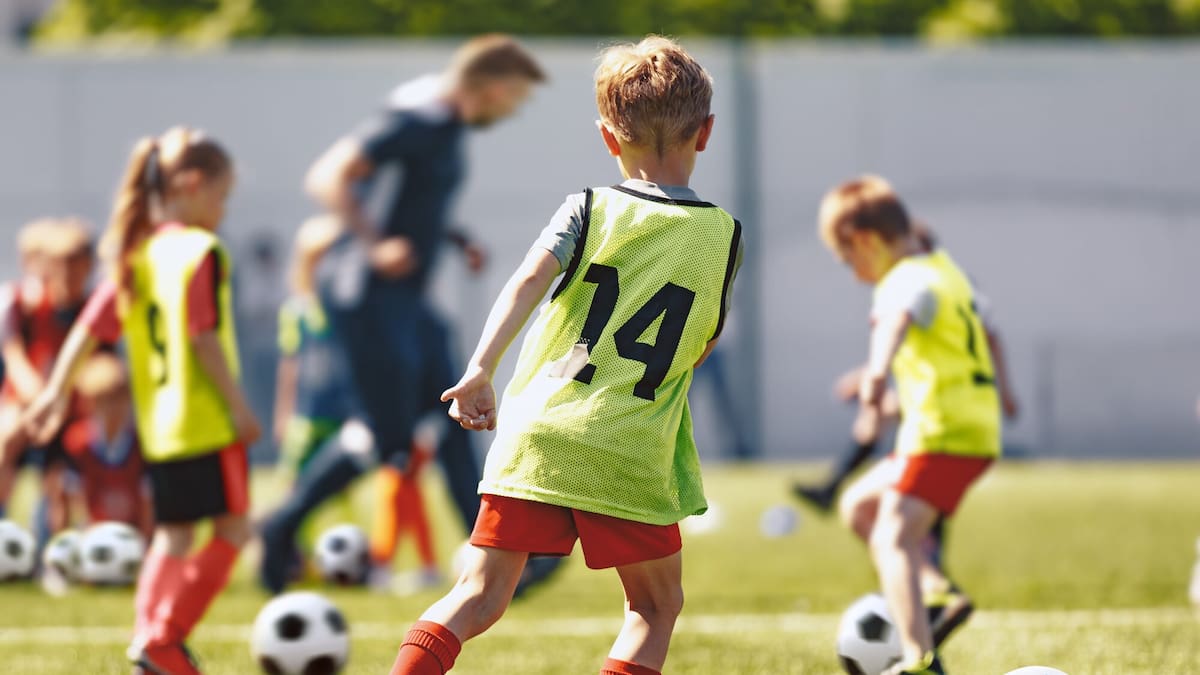
Research shows that movement that forces the brain to react, plan and make split-second decisions may help the most. Photo / 123rf
There’s a bit of folk wisdom among mothers of kids with ADHD: Want your kid to sit still and focus at school? Get them to run around outside first.
The assumption has long been that kids simply need to burn off excess energy. But research points to something more surprising:
while exercise is good for nearly everyone’s brain, some studies suggest the cognitive boost may be especially pronounced in people with ADHD by aiding executive function. These abilities – holding information in the mind, resisting impulses and distractions, and shifting gears when circumstances change – are often challenging for people with ADHD.
Which raises a new question about the playground prescription: does it matter how you move?
In the past year, there’s been a surge in ADHD and exercise studies providing new information about what kind of exercise and how much might make a difference. The evidence is converging on the idea that movement that forces the brain to react, plan and make split-second decisions – say, basketball rather than running laps – may help the most.
Nicole Logan, an assistant professor at the University of Rhode Island who works at the intersection of kinesiology and neuroscience, sees potential interventions that could turn doctors’ “get more exercise” advice into something much more specific.
Advertise with NZME.
“The goal is to maximise the exercise-cognition relationship,” Logan said.
What type of exercise is best?
One of the largest analyses of ADHD and exercise was published in 2026 in the Journal of Sport and Health Science, pooling 39 randomised controlled trials involving 1836 children and adolescents with the condition. The individual studies were generally small and varied considerably in how they were conducted, but their randomised design is important: by assigning participants to an exercise intervention or a comparison group, researchers could better determine whether exercise itself is responsible for any differences they see.
Researchers broke exercise into two categories that they described as closed-skill and open-skill.
Advertise with NZME.
Closed-skill involves more predictable, repetitive, self-paced workouts. This includes running and swimming. Open-skill workouts were described by the authors as being in “dynamic, unpredictable environments” and requiring decision-making, spatial awareness and adaptation. This category includes not only team sports such as basketball and football, but also tennis and martial arts. (Taekwondo in particular has been a popular area of study for cognition researchers recently.)
Both were good for the brain, but there were striking differences.
The first set of exercises was linked most closely to helping with symptoms that are the hallmark of ADHD, such as either inattention or hyperactivity and impulsivity. But the second set appeared to affect cognitive skills related to executive functioning, such as inhibitory control, working memory and cognitive flexibility.
“These inherent demands are thought to more directly engage and train prefrontal cognitive control circuits, yielding superior specific benefits” for executive functioning, Meng Zhang, a researcher with the School of Exercise and Health at Shanghai University of Sport, and colleagues wrote in the paper.
Another meta-analysis, published online in Paediatric Research in August 2025, analysed 33 exercise intervention studies in children and adolescents with ADHD. Rather than simply asking whether exercise helped, the researchers looked for “sweet spots” in the type and amount of exercise associated with improvements in three executive function skills:
- Cognitive flexibility involves switching between tasks or skills, with a lack of such traits triggering potential upset at the sudden change of plans or an unpredictable situation. Swimming and ballgames helped here.
- Working memory involves holding and manipulating information in the mind, allowing for tasks such as doing division in your head. Martial arts and rope skipping appeared potentially beneficial.
- Inhibitory control suppresses impulses, such as interrupting someone or jumping off something that’s too high. Running was linked to improvements in this area.
Why these specific sports appear to benefit different skills is not clear. But the study authors suggested the mental demands of the exercises might have played a role. Martial arts, for example, requires participants to hold a sequence of movements in the mind, essentially putting working memory to work.
What ‘dosage’?
Both studies found evidence of a “dose effect”: the benefit was dependent on the amounts of exercise that were quantified by combining the intensity, duration and frequency of activity. There was one caveat, however: similar to other recent exercise findings, there was a limit to how much exercise could help. The benefits increased as the exercise amount increased, but it eventually reached a plateau.
The Journal of Sport and Health Science came up with a minimum overall “exercise dose” of about 20 to 25 minutes per day of moderate-intensity exercise, which is about the level you can comfortably exercise and hold a conversation.
Advertise with NZME.
The Paediatric Research paper calculated dosage in MET-minutes per week. MET is a measure of how much energy an activity requires. So if 1 MET is sitting or resting, then 8 METs uses eight times as much energy. Eight METs is usually considered vigorous and about 3-6 METs moderate. The study found different optimal doses depending on the cognitive skill.
For cognitive flexibility, it was 1000 to 1400 MET-minutes a week, which is roughly two to three hours a week of vigorous full-court basketball, or three to nearly five hours of casually shooting baskets.
Melanna Cox, an assistant professor of kinesiology at the University of Mass