Interior design mistakes: 10 common pitfalls and how to avoid them
Design expert Tim Webber says build a room around what makes you happy. He talks to Leanne Moore about the mistakes New Zealanders make and how to avoid them.
Furniture designer Tim Webber has visited many homes in his time. After more than a decade working with some of New
Zealand’s top architects, he knows what it takes to create a space that looks and feels good. Here’s his expert advice on what works – and how to avoid the pitfalls that can ruin a room.
Texture brings a room to life – the marble-topped coffee table, the tactile sofa fabric and shiny black floor lamp, all by Tim Webber Design. Photo / David Straight
As the founder and lead designer of Auckland-based Tim Webber Design, you must see some outstanding homes… what’s the key to creating an original and exciting interior?
The best interiors I walk into feel collected over time, not bought in a single weekend.
Another key ingredient is something a little unexpected. It might be a sculptural object or a piece of art you didn’t see coming, or simply a material used somewhere you wouldn’t expect, like a marble side table in a bedroom or a bold stone in a powder room. Those moments create intrigue and interest, and they’re what make a home feel personal rather than styled.
For me, it almost always comes back to texture. It’s the quiet hero of a room – you might not notice it straight away, but you definitely feel it. A hand-rendered wall, a sofa upholstered in a fabric with textural depth, the grain of solid timber, the weave of a rug, a honed stone with some movement through it. Those layers give a space richness and make it so much more inviting than a room full of flat, smooth surfaces.
Furniture designer Tim Webber launched Tim Webber Design in 2011. Photo / Simeon Patience
Where do people go wrong with their interiors?
Playing it too safe. Which is completely natural. Colour can feel like a commitment, so we default to white walls, a grey sofa and neutral everything, and the home ends up feeling a little bland and anonymous.
Advertise with NZME.
Injecting some colour, mixing materials and layering texture is what makes a space feel well considered. Even within a neutral palette you can play with tone and contrast to add depth to a room – warm whites against walnut timber, an olive or rust fabric, a darker stone.
Another thing I often see is rooms where the scale is wrong. Rugs that are too small, art that’s too small, pendants that get lost in the space. When in doubt, go up a size. Generous proportions always look more confident.
What’s the most important piece of furniture in a home?
Invest in pieces that you’ll use a lot, such as a comfy armchair. Grayson Chair by Tim Webber.
Photo / Supplied by Tim Webber Design
It really depends on your lifestyle, your stage of life and the space you spend the most time in. For one person it might be a favourite lounge chair tucked in the corner for a quiet read – that could easily be the most used and loved piece in the house. For a young family it might be a deep, soft sofa for movie nights with the kids, or the dining table where meals are shared, along with the day’s stories.
So I’d start by asking yourself where in the home you actually live, and where you enjoy being the most? Invest in the pieces in those spaces that you use every day. That’s when quality pays you back, in how they age, and in the enjoyment you get from them over many years.
Do we care too much about what friends and family will think when it comes to our decor decisions?
Create a home that feels right for you – and don’t worry about what others will think. Photo / Supplied by Baya
Sometimes. Worrying about other people’s opinions can be really limiting when you’re weighing up a bold decision. Your home is for you. It’s where you live and spend your time, so create a space that makes you happy – not one designed to impress anyone else. And I can almost guarantee that when a home is genuinely personal, everyone else ends up loving it too.
A home should be a reflection of the people who live in it, filled with things that bring you joy. And that’s such an individual thing. Some people love a very clean, pared-back home, and that calm is what brings them peace. Others love to be surrounded by art, objects collected on their travels and family photos. There’s no right or wrong, it should be what you enjoy.
Advertise with NZME.
You work with some of New Zealand’s top architects… what does great architecture do?
It sets a calm, confident framework, and my job is to create pieces that feel like a natural extension of it, rather than something brought in afterwards.
Award-winning architect John Irving’s own home, featuring the Series Sofa by Tim Webber. Photo / Samuel Hartnett
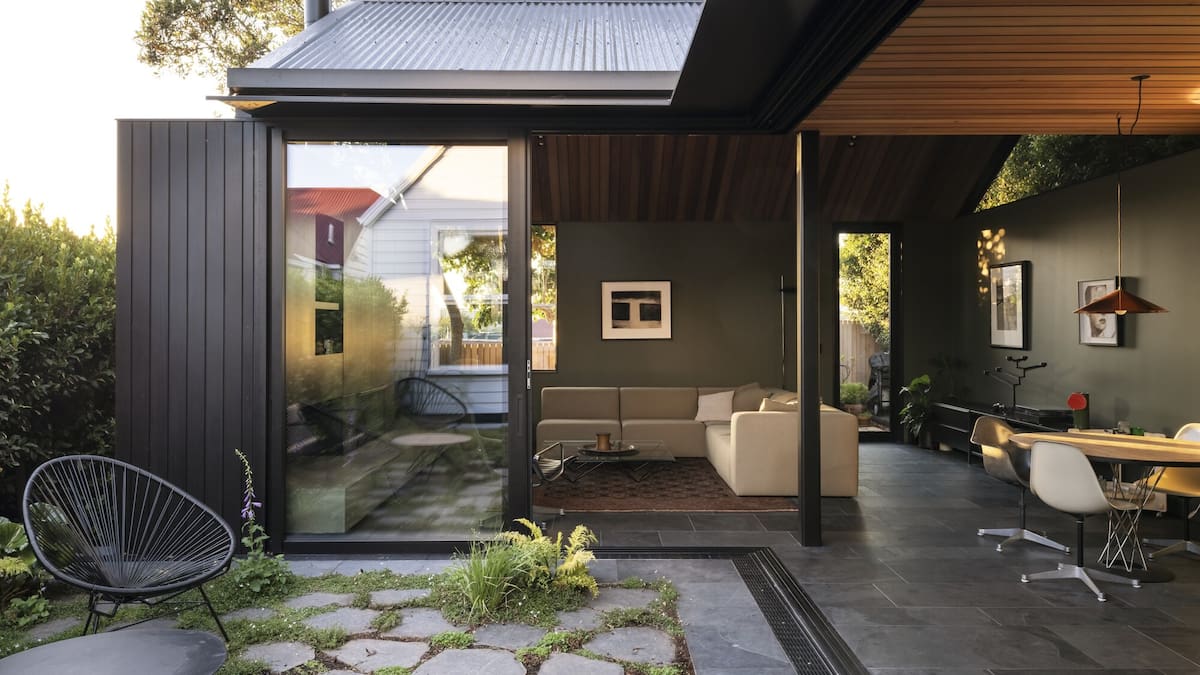
An example is a project we worked on with architect John Irving – the interior of his own home – which has an aesthetic coherence that’s reflective of our collaboration. I particularly like the way the living room balances strength and softness. The dark timber ceiling and deep olive walls create a moody, sheltering space, while the soft, generous form of our Series Sofa brings warmth and comfort. It feels considered and resolved, but still relaxed, creating somewhere you naturally want to spend time.
Lighting can be tricky – what are some of the pitfalls?
Lighting has an incredible impact on how a space feels, but it’s so often an afterthought. The biggest pitfall is having too much light where it isn’t needed, and not enough where it is. A kitchen island needs to be bright enough to actually work at (which can still be achieved with beautiful decorative pendants). Over the dining table, though, the light can be much more ambient. You’re there to linger, not to chop onions, so it doesn’t need a row of bright spotlights.
The other trap is relying on a grid of downlights across the ceiling. It flattens a room, and if the colour temperature is too cool, it can feel more like an office than a h