I’m a doctor with terminal cancer. Here’s what facing death has taught me about living
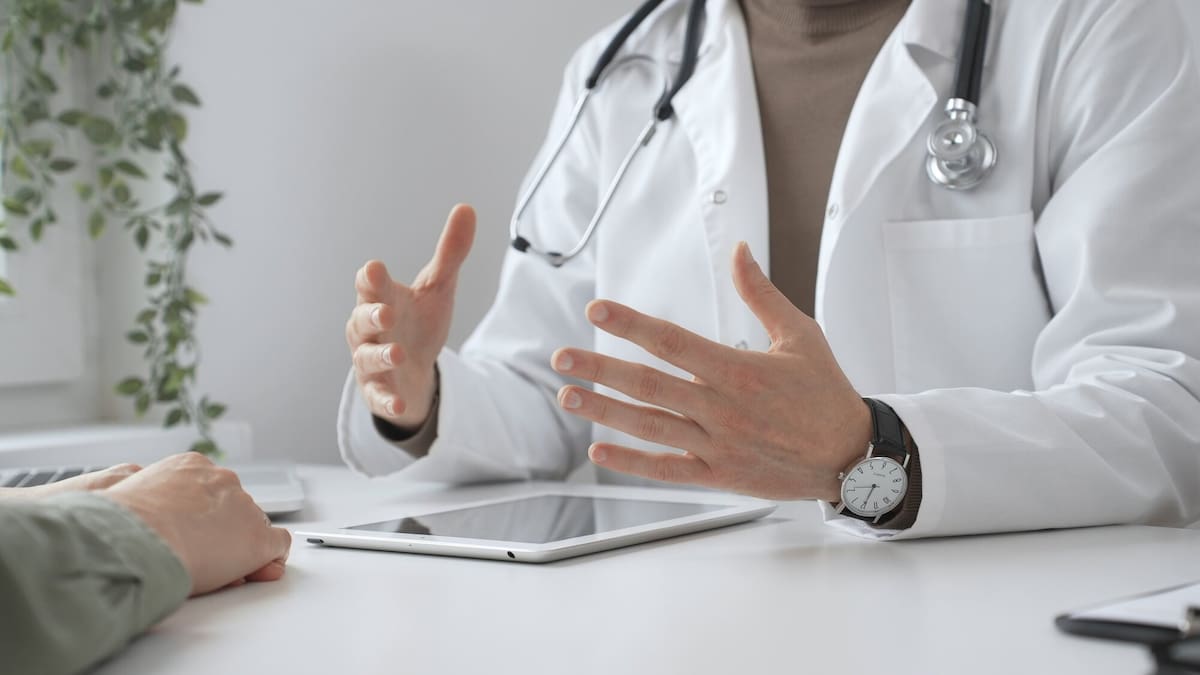
Dr Bryant Lin had treated many patients with lung cancer over the years. His own diagnosis came as a huge shock. Photo / 123rf
Dr Bryant Lin spent two decades studying the rise of lung cancer in non-smokers – until a lingering cough revealed his own diagnosis.
I’ve had a great medical career. For 20 years, I’ve worked at Stanford University’s Department of Primary Care and Population Health – I’m now clinical professor of
medicine and director of medical humanities and the arts. I’ve practised primary care, taught classes, started companies, conducted research into medical devices, and I hold 17 patents – all kinds of fun stuff. I also co-founded the Stanford Center for Asian Health Research and Education (CARE).
I’ve seen everything. I’ve treated many patients with cancer over the years, specifically lung cancer, and I’ve seen people pass away. For me to be diagnosed with stage four lung cancer was a huge shock. I’ve never smoked a day in my life. Around one fifth of all people with lung cancer have never smoked, but you never expect it will happen to you, especially not at my age. I was diagnosed on May 13, 2024 – a month before my 50th birthday.
A persistent cough
It started with a persistent cough. I thought: “Geez, maybe it’s just allergies.” I’d be walking around at night before I went to bed, coughing, waking my family up. I tried allergy medications and asthma medications but the cough didn’t get better. After five or six weeks, I decided it was time to be more aggressive. In one week, I had an X-ray, a CT scan and a bronchoscopy, trying to figure out whether it was a weird infection or cancer. By the following Monday, I had a formal diagnosis of lung cancer.
Advertise with NZME.
Within a week, an MRI scan showed 50 spots in the brain. A PET scan showed the cancer had spread outside my lungs to the liver, adrenal glands, bone and brain. I even had lumps of pure cancer under my skin. I could feel it. I didn’t even know, as a doctor practising for 20 years, that you could get lumps of pure cancer under your skin.
As a doctor, I knew the stats were around a 10% survival rate at five years for all patients with advanced lung cancer. Of course, you always hope you’re one of the 10%. You never know – the odds may be with you.
With a terminal diagnosis, there are two purposes for treatment: to extend life and to improve quality of life. I had 16 months of chemotherapy, and a daily pill – a targeted therapy called Tagrisso. Last autumn, my cancer was rapidly getting worse. Fluid filled up in my lung – I had 1.3 litres drained. Finally, I was switched to a new treatment: an antibody, plus a pill. Unfortunately, I had another progression this summer and I had to get radiation to my lung to hopefully prolong my time on the current treatment.
When it came to dealing with terminal cancer, I knew about it theoretically. I knew second-hand. But you never really know until it happens to you. It was a rollercoaster. In terms of the stages of grief, there was a bit of anger, and more denial and depression, but acceptance came quickly. As a doctor with a patient, you’re trying to balance objectivity and empathy. When you’re the patient, it’s far more about emotion.
Advertise with NZME.
Sharing the news
It wasn’t like it is on TV, where we walked in the room and there’s a moment where somebody tells you. As a doctor and an “insider”, I got information continuously as every test came back. My wife Christine was with me the whole way. Every time I got a result, I told her all the infectious disease tests were coming back negative, so it was more likely cancer.
My sons, Dominic and Atticus, were there the whole way, too. They were 12 and 16 at the time. I was more worried about their reaction than anything about me. We were very transparent and kept them informed, rather than a sudden announcement of bad news. I felt a lot of terrible nausea and fatigue, and I didn’t hide that. It’s tough to say: “Hey, I’m sick.” But it helped to share every update along the way.
They’re at the age where they think they’re indestructible and they also think their daddy’s indestructible. They understand everything clinically but I don’t know whether they know it emotionally because they’re teenagers – they don’t have that life experience of losing people. But they’re happy, optimistic people, like me – they’re appreciating the time they have with me.
I’ve had conversations with them about me not being around in the future. I worked with a friend at Stanford, Frish Brandt, who calls herself a “Letter Midwife” – she helped me write a letter to my kids. I relayed many things, including the importance of serendipity in my life. I talked to my kids about the fact that life doesn’t go in a straight line and random stuff happens – some good, some bad – and that it’s good to be able to recognise things as an opportunity.
I thought about recording videos for them – leaving life lessons and advice for my kids. I don’t know whether I’m ready to do that yet – I don’t even know what I’d say.
For my birthday in June, my oldest son, Dominic, wrote me a card. He said: “I really admire all the things you’re doing about lung cancer, speaking up and writing a book.” He’d never said these kinds of things to me before.
Looking for a silver lining
I’ve been lucky. I’m still able to teach. I’ve taken a holiday but I haven’t taken a day off for sick leave – I probably should’ve. I still see patients. I still co-run our centre. With cancer, it’s not just about how much time you have, but what you do with it.
Within a month of my diagnosis, I started thinking: “How do I turn lemons into lemonade?” I always look for a silver lining. By the autumn, I’d set up the Stanford medical school course From Diagnosis To Dialogue: A Doctor’s Real-Time Battle With Cancer. I wanted to share my experience. It made me reflect and think about what’s important. One of my colleagues said: “Why don’t you travel the world and ch