Government could forgo $12b revenue by 2035 if it doesn't fix ETS
20 November 2026, 8:55am
Government could forgo $12b revenue by 2035 if it doesn't fix ETS
Kate Newton
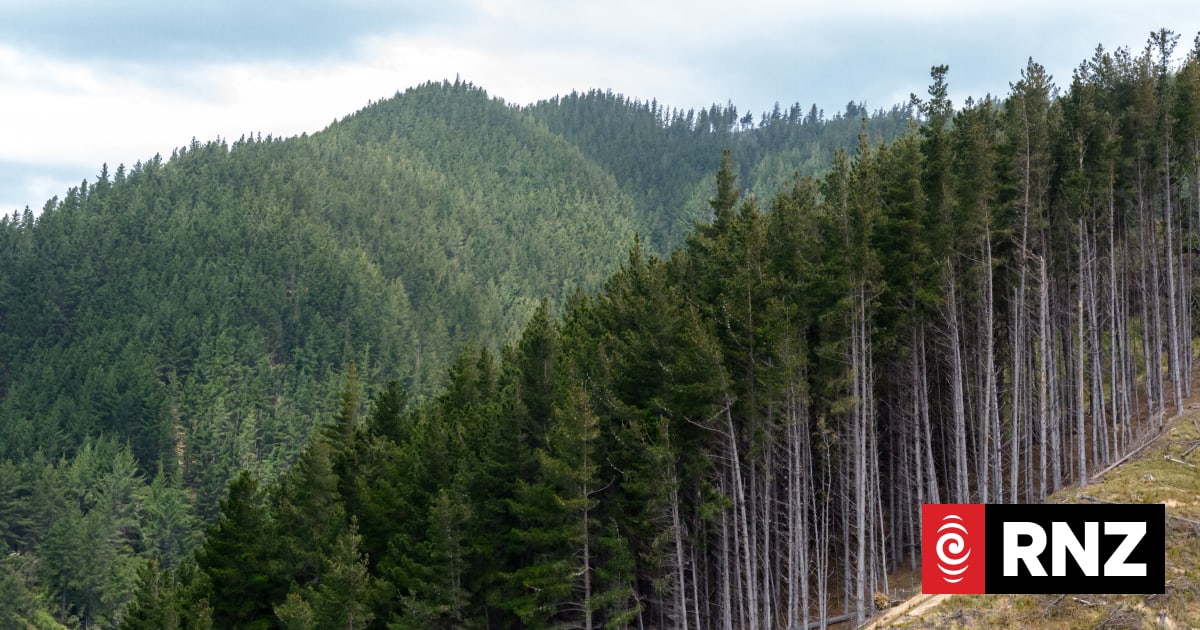
Caption:A new report says the government could also forgo as much as $12 billion in revenue by 2035 if it doesn't fix the emissions trading scheme.Photo credit:123RF
The government could forgo up to $12 billion in revenue from carbon auctions if it does not overhaul the emissions trading scheme, a new report says.
The research, published Friday by policy think-tank Motu, said the current scheme was delaying cuts to New Zealand's climate pollution and needed major reform.
Instead of driving down emissions, the scheme was creating "investment risk for emitters and foresters, climate target risk for the government, and intergenerational risk for New Zealanders".
By the mid-2030s, without changes to the scheme, the government would be forced to bring an early end to its quarterly auctions, and the potential revenue from them, the report found.
The country would briefly meet its 2050 net-zero target, but emissions would then rise again, it warned.
The incumbent government has said the emissions trading scheme (ETS) should be the main tool for driving down New Zealand's emissions.
Earlier this week at the annual global climate summit, caretaker climate minister Simon Watts noted in his national statement that New Zealand's ETS, established in 2008, was "the second oldest in the world".
Caretaker climate minister Simon Watts.
RNZ/Baz Macdonald
However, the Motu research is the second report in just a few months to declare the scheme "rudderless", because of design flaws that have encouraged massive forestry planting instead of actual cuts to emissions.
In August, the Parliamentary Commissioner for the Environment called for forestry - which can earn carbon credits - to be removed from the scheme.
The scheme requires polluters to surrender one carbon credit - known as New Zealand Units - for each tonne of emissions they create in a year.
They can buy units at quarterly government auctions, or receive them for free if their business creates emissions that are difficult or expensive to reduce.
The ETS also allows forestry owners to earn and sell units for carbon dioxide stored in trees.
There is no limit on forestry units that can enter the scheme, and so no incentive to cut emissions as long as trees continue to be planted and polluters can afford the credits.
Modelling in both the Motu and PCE reports concluded that by the mid-2030s, a glut of carbon units from forestry would converge with falling demand for those units as polluters gradually decarbonised anyway.
With no extra credits needed from the quarterly auctions, the government would lose control over supply and demand, along with the ability to earn auction revenue.
"Deferring policy change beyond 2030 could forgo around $11-12 billion in auction revenue through 2035," the report said.
Like the PCE report, Motu's suggested "direction of travel" was to take sequestration like forestry out of the scheme altogether - though stockpiled surplus credits could be kept to "honour past investments".
The revamped ETS would encourage polluters to curb their emissions faster, or pay for credits that would steadily increase in cost without unlimited forestry units suppressing the price.
Modelling in the report showed the money raised from auctions under that scenario would be enough to fund a separate 'removals incentive mechanism' that could include native planting, wetlands restoration and other forms of carbon storage.
Catherine Leining, policy fellow at Motu Economic and Public Policy Research.
Supplied / Motu
Lead author and former climate change commissioner Catherine Leining said that would mean carbon removals and emissions cuts could both happen without one being traded off against the other.
"They're actually very different, and New Zealand needs both and the climate needs both," she said.
The UN and other global organisations had now concluded it was inevitable the world would exceed 1.5°C of warming, and was also on track to go past 2°C, making carbon removals to reverse climate change more important than ever, Leining said.
"The need for removals is going to rise as temperatures rise, but emitters are going to stop buying as they decarbonise.
"That creates a lot of demand uncertainty for foresters in the long-term when we really need their forestry."
Motu's modelling showed there would be a "net fiscal benefit" even after paying for a removals scheme, Leining said.
It showed New Zealand could not only reach and maintain its net-zero target by 2050, but could also reach the Climate Change Commission's more ambitious net-negative target - a recommendation rejected by the government last year.
Nobody involved in the scheme was served well by it at the moment, she said.
Price volatility made it hard for both foresters and emitters to plan and invest, the government was already losing revenue through failed auctions, and the scheme's failure was pushing the costs of climate change onto younger generations.
Motu's report was just a starting point but the organisation wanted to see the government start work on reforms immediately, Leining said.
"We're really encouraging the policy development process to start now, because this is actually a process that's going to take time to do well."
That process and any changes needed to be carefully staged, with inclusive an