Gisborne Mayor calls for national climate resilience framework
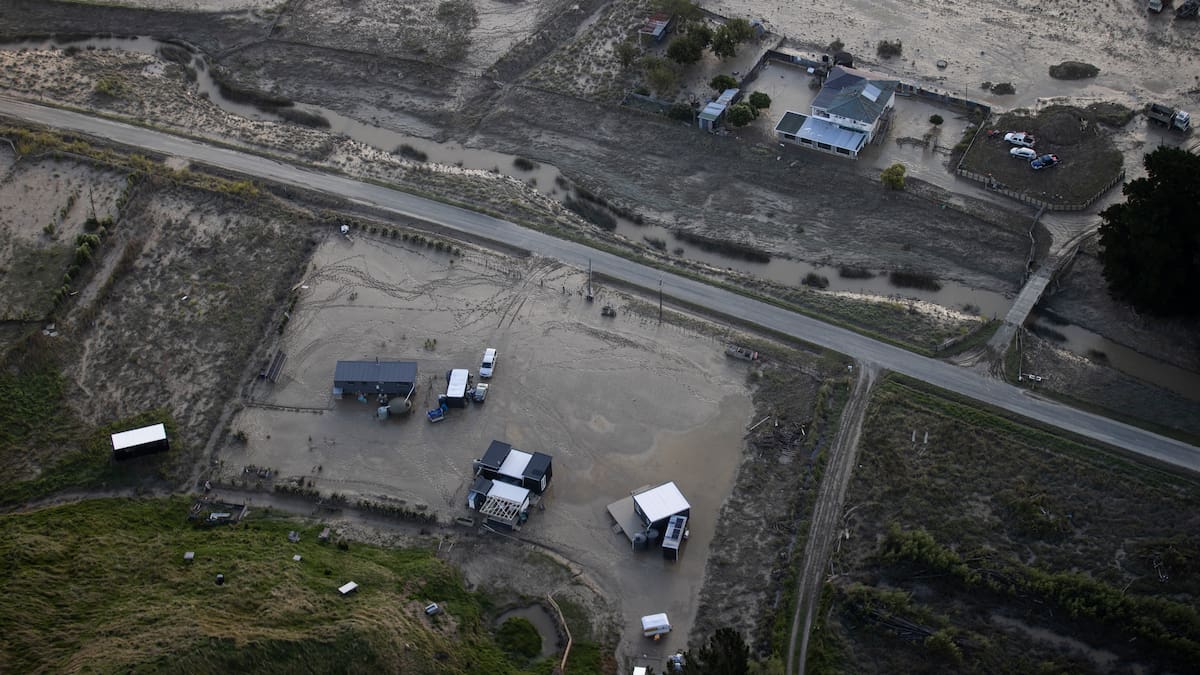
Gisborne District Council has worked with central government and communities to progress flood resilience projects since Cyclone Gabrielle. Photo / NZ Herald
Local Government New Zealand is calling for a national plan on adapting to climate change that sets out the responsibilities of central and local government, communities and the private sector.
LGNZ president Rehette Stoltz said a national climate resilience framework would set clear responsibilities to help communities navigate difficult decisions
about their future.
“The incoming Government has an opportunity to give communities certainty,” she said. “We need a framework that lasts beyond an election cycle and supports action now before the choices become more difficult and more expensive.”
The call followed an announcement by Westpac New Zealand that it would share its natural hazards risk report, used to inform lending decisions, with home loan applicants.
Westpac head of consumer lending and insurance Jo McGregor told the Herald limits on lending against properties deemed exceptionally risky would affect fewer than 2.5% of mortgage applications.
Advertise with NZME.
Advertise with NZME.
Stoltz said the announcement highlighted the need for the incoming Government to prioritise a climate resilience framework with clear responsibilities and long-term funding arrangements.
“Banks and insurers cannot build flood protection, adapt infrastructure, or make the difficult decisions needed to keep communities safe. Communities need to know what can be done, who will act and how the costs will be shared.”
Increasing natural hazard risks could place a greater financial burden on households and communities through insurance and lending decisions, with wider economic consequences, she said.
Advertise with NZME.
Central government needed to focus on reducing risks before disasters occurred, rather than relying on recovery, including through initiatives such as the Before the Deluge flood protection pipeline.
LGNZ wants a national climate resilience framework developed with councils, communities, banks and insurers to establish responsibilities and clarify who would pay for what.
Flood protection was essential but one could not assume more infrastructure would make every place safe in the long term, she said.
“We need to consider the full range of options for each community, including how we adapt buildings and infrastructure, where we allow development and supporting people to move out of harm’s way where necessary.”
Speaking as Gisborne Mayor, Stoltz acknowledged announcements about natural hazard risks could create uncertainty for home owners, buyers and sellers.
Advertise with NZME.
While she could not comment on how Westpac’s announcement might affect individual Gisborne properties, she said the council would continue providing relevant hazard information and supporting decisions about managing and reducing risks.
The council was progressing work on flood resilience, stormwater and drainage, catchment management and improvements to warning systems and emergency preparedness.
“Following the severe weather events of recent years, council has worked with central government, iwi, hapū, landowners and communities to investigate and progress flood resilience projects across the region.”
She welcomed continued collaboration with central government to provide national direction, reliable hazard information and sustainable funding.
“For Tairāwhiti, ongoing support for flood resilience, infrastructure improvements and practical risk reduction measures is particularly important.
Advertise with NZME.
“We also support greater clarity about the respective responsibilities of central and local government, communities and the private sector in responding to natural hazard risks.”
Stoltz said the council already considered flooding, coastal hazards, erosion and land stability when making land use planning and infrastructure decisions.
“The presence of a natural hazard does not automatically prevent development. Decisions depend on the nature and level of risk, the proposed activity and the relevant planning requirements.”
Any proposed changes needed to be supported by appropriate evidence and follow statutory processes, including public consultation, she said.
The council’s Plan Change 6, which seeks to enable more housing choices within Gisborne city, had also considered natural hazard risks.
“The proposed plan change is progressing through an independent hearings process, where relevant evidence, submissions and planning requirements will be considered before decisions are made.”
The focus remained on managing risks to people, property and infrastructure while enabling appropriate development, she said.
LDR is local body journalism co-funded by RNZ and NZ On Air.
Advertise with NZME.
Save
Share
Latest from Gisborne Herald
Gisborne Herald
Person dies after house slips off foundations in Ruatōria
22 Nov 02:43 AM
Gisborne Herald
'Absolutely terrifying': Shots fired at family's home, police declare gang crackdown
20 Nov 06:34 AM
Gisborne Herald
Campground and club vie for Tokomaru Bay reserve lease
20 Nov 04:00 AM
Auckland’s gridlock fix: Small changes, big gains
15 Nov 03:00 PM
Advertise with NZME.