Election review: We voted for 120 MPs. How did we end up with 131? – Bruce Cotterill
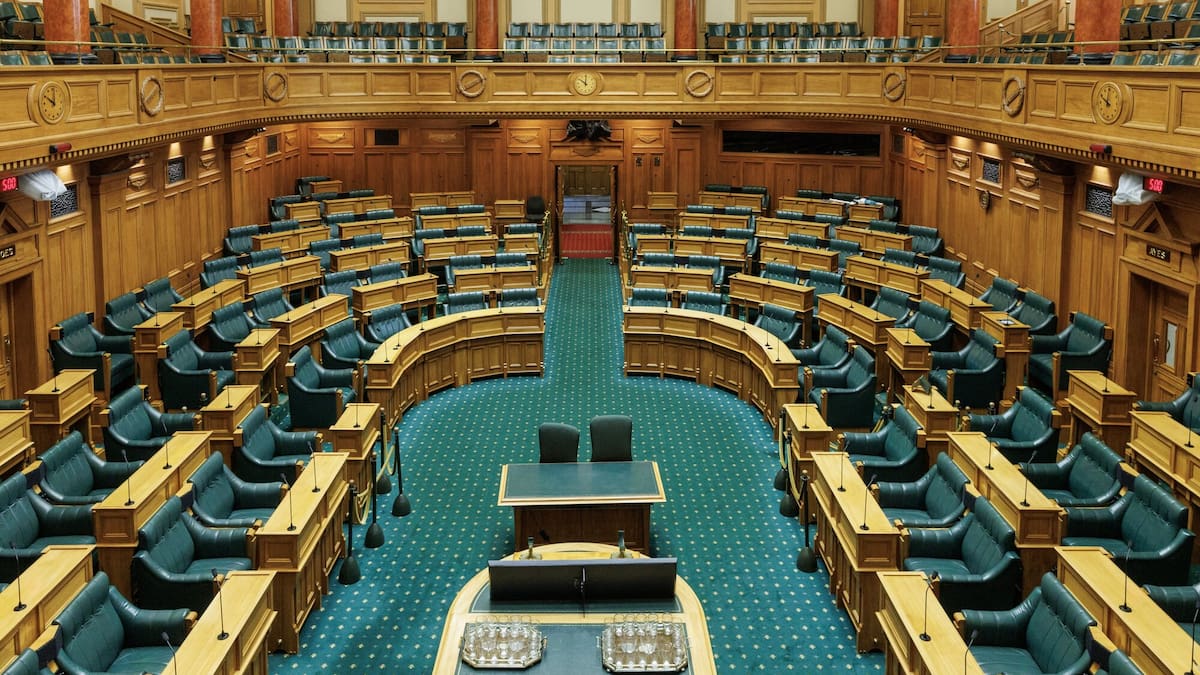
The overhangs have lifted Parliament to 131 MPs, up from 120. Photo / Mark Mitchell
There’s been a rather pleasant lull in political coverage over the past couple of weeks. After a six-week bombardment from needy politicians littering our news bulletins and social feeds, we’re enjoying a short-term vacuum.
But who would have thought that the election would trigger a whole new debate about the
future of our voting system?
In the past two weeks, we’ve been talking about overhangs, why special votes take so long to count and even proposals to change MMP.
It seems ironic that there is so much to discuss regarding an election, the outcome of which we may not know until early next year.
Next year? Really? I kid you not.
Advertise with NZME.
The special vote count is due on November 27. If the incumbent coalition is retained in its current form, we should imagine that they can get a new Government underway quite quickly. After all, for the most part they know each other and have been working together for the past three years.
I’d like to think they’re working on that scenario currently in the hope that they’re good to go once the special votes are in.
But, if they need a little help from TOP, it could get messy and drawn out.
Advertise with NZME.
It becomes even more challenging if the special votes throw up surprises and a left-sided coalition comprising Labour, Green, TOP and Te Pāti Māori comes into the game. Four parties, six leaders. Who knows how long we will have to wait?
February anyone?
So, are you over MMP yet?
Interestingly, the two major talking points post-election have been the overhang and, as a result, the appropriateness of our electoral system.
Let’s start with the overhang. It delivered something that most of us didn’t vote for. More MPs. Personally, I’d like fewer. One hundred and thirty-one members of Parliament is 11 more MPs than we expected. This at a time when we should be striving to get the size of government and its associated cost down. More MPs means more assistants, more desks, chairs, phones and travel costs. More passengers watching the qualified few do the work and generate the headlines.
It seems that the overhang is driving a newfound dislike for our Mixed Member Proportional representation system, or MMP for short.
The post-election polls are telling us that we’re over it. A third of participants in a Stuff poll want MMP scrapped altogether. Another 26% want it changed. Just 21% want it retained as it currently is. It’s an interesting reaction considering we’ve voted for the system twice in the past 30 years.
We’ve had overhangs before. In fact, by my calculations, this election will be the fifth occasion in which the Māori Party has benefited from an overhang.
Advertise with NZME.
It happens when a party wins more electorate seats than its party vote entitles it to. This time around it won five electorate seats and yet won only 0.6% of the party vote, an endorsement that would ordinarily entitle it to only one seat.
But in election 2026, the overhang happened on the other side of the political spectrum too. Based on the provisional results, National, the biggest party in both the last and the next parliaments, won 42 electorate seats. But their 29.2% of the party vote would ordinarily entitle them to seven fewer seats.
So, for the first time in the history of MMP, the centre right has benefited from the overhang to a greater extent than the centre left.
Chris Hipkins, Qiulae Wong, Chlöe Swarbrick, David Seymour and Christopher Luxon. Composite
As a result, some on the political left are now suggesting that the system needs to change. The Labour Party leader, Chris Hipkins, claiming that Labour had won the party vote, came out post-election with the absurd claim that National were “only holding on to the prospect of power because they’ve manipulated the electoral system”.
This claim alone generated a couple of thoughts. Firstly, as poor as their campaign was, as I recall it, National campaigned very heavily on a “two ticks for National” platform. Against that backdrop alone, I think it’s a stretch to suggest that they engineered the overhang.
Secondly, the election that catapulted Hipkins to the government benches in 2017 saw his party form a government with a party vote of just 36.9% against National’s 44.4%. The term “short memories” comes to mind!
Thereafter, an article earlier this week told us that “more than 40 of New Zealand’s leading constitutional experts”, largely a gaggle of university academics and others, have signed an open letter calling for changes to MMP.
Strange that there were no such calls when the left-leaning parties were benefiting from the aforementioned overhangs.
That said, there is no question that MMP needs a review. We should recall that the Electoral Commission recommended abolishing the overhang seats in 2012. We should also recall that the original design of the MMP system called for the abolition of the then four Māori electorates, not to diminish their representation but to recognise that Māori representation would be delivered via the proportional system. Many have since argued that Māori have been over-represented in the MMP era as a result.
It’s important to highlight that any review should not contemplate a return to our old system of representation, first past the post. That train has long left the station. But perhaps there are some clues in the 2026 result.
We all know that the election, based on provisional results only and admittedly subject to change, delivered 131 MPs of which 67 will come from the incumbent coalition parties.
It’s useful to look at this result through a different lens.
Suppose we had just one vote, we were limited to 120 MPs and the electorate vote was all that counted. National won 41.26% of the electorate vote while Labour won 33.79%, a total of 75% of the vote shared between the two main parties. The Greens were next with 8.9%, shading NZ First and Act combine