Charges for low-level drug offending reach highest level in a decade
20 November 2026, 4:02pm
Charges for low-level drug offending reach highest level in a decade
Finn Blackwell
Morning Report
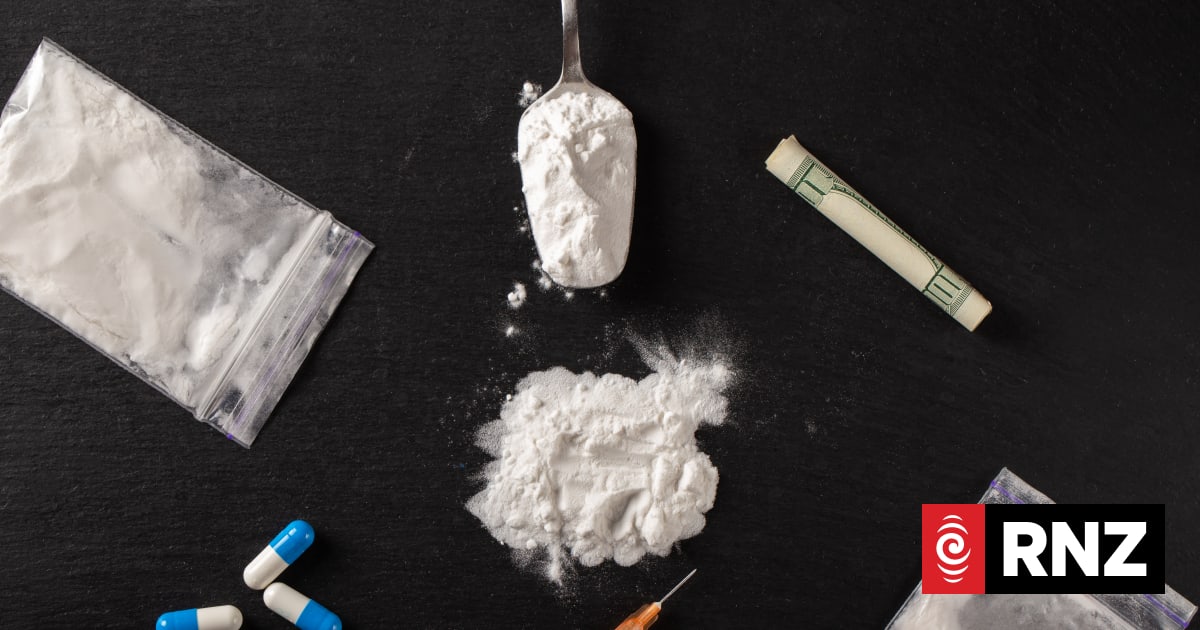
Caption:More people are being charged for low-level drug offending than ever in the last decade.Photo credit:Aleksandr Shyripa
Audio player for "Law expert questions approach to low-level drug offences" removed for printing
Visit page to play audio: https://www.rnz.co.nz/news/eyJhbGciOiJIUzI1NiJ9._v0.KrRTFtoPsaA8nSDloPZ4KejQJr59ANQpD9ULgGwzaM0/crime-and-justice/2693667%2Fcharges-for-low-level-drug-offending-reach-highest-level-in-a-decade
Law expert questions approach to low-level drug offences
Morning Report
*This story has been updatd to clarify the charges for low-level drug offending are at their highest level in a decade.
The number of people being charged for low-level drug offending has reached its highest level in a decade, despite a 2019 law change telling police not prosecute unless it's in the public interest.
Authorities had been told to consider a health-centred approach instead, but data collated by the Drug Foundation shows more than 4200 people were charged for unlawful possession or use in 2025 and 2026 period.
Of those cases, 960 had possession or use as the only charge they faced.
In the same year, 15 people were imprisoned for drug possession or use alone.
The report also highlighted that Māori were charged with drug offences nearly five times more than the rate of non-Māori in the last year.
Audio player for "Law expert questions approach to low-level drug offences" removed for printing
Visit page to play audio: https://www.rnz.co.nz/news/eyJhbGciOiJIUzI1NiJ9._v0.KrRTFtoPsaA8nSDloPZ4KejQJr59ANQpD9ULgGwzaM0/crime-and-justice/2693667%2Fcharges-for-low-level-drug-offending-reach-highest-level-in-a-decade
Law expert questions approach to low-level drug offences
Morning Report
The maximum penalty for possession or use is three to six months in prison depending on class, or a fine of $500 to $1000.
AUT dean of law school Khylee Quince
Supplied
Auckland University of Technology dean of law school Khylee Quince said the figures needed to be seen as part of a bigger picture which has Māori disproportinately represented in prosecutions and convictions in all offence categories.
"Drug use and possession and drug-related offending is just a smaller picture of that bigger picture."
Quince said there were three main conclusions she could draw:
- Police were not applying the 2019 amendment effectively
- There was probably still systemic or unconscious bias in the policing of Māori
- The Misuse of Drugs Act needed to be overhauled and review the resourcing of helping people who misused drugs.
She said 1000 people were charged solely for possession or use of drugs, 15 were sent to prison and 10 of those people were Māori.
Those people had not been arrested for other offences so had probably been randomly stopped by police when they were in vehicles or on the street.
The 2019 amendment to try and cut down the number of people prosecuted was "clearly not working".
"That tells us that police have either not been properly informed or trained as to how to interpret and apply those legal obligations."
Police were not meant to prosecute unless it was in the public interest and must consider a health-related response instead.
"The police should be policing differently and there's clear evidence that they aren't."
While she welcomed diversity within the police force, she questioned how officers were being trained and equipped to be robust in their interpretation of the law.
"This tells us something about what we should be doing at police college and the way in which these people are supported to do their job in the community."
Worrying trend, Drug Foundation says
Dave Burnside is the lived experience leader at Odyssey Trust, an addiction treatment service based in Auckland.
He said the trend was worrying.
"Particularly when most of the world is turning to a health not handcuffs approach and recognising the futility of criminalising drug use particularly and possession," he said.
Odyssey Trust lived experience leader Dave Burnside.
Supplied / Odyssey Trust
Burnside had his own experience with the system, where minor cannabis charges led him on a downward spiral to other offending and prison time.
"It gave me a criminal record, it affected my opportunities in terms of employment, travel, education and other things," he said.
"I ended up spending considerable time in jail over my life, and the offending increased."
It was only when Burnside was able to get treatment later in his life that he was able to break free from that world.
"There are alternatives that exist, and we're just not using them," he said.
He said there needed to be investment and provision for treatment options, as well as a shift in perception.
"One of the key things is that criminalising people, charging more people, imprisoning more people does not make communities safer," Burnside said.
"Those people will come out, they will have lost any sort of employment, any housing, any supports that they've had and be expected to rebuild that with very little support."
NZ Drug Foundation executive director Sarah Helm
Supplied/ NZ Drug Foundation
Executive director of the Drug Foundation Sarah Helm said over the period covered by the report, [consumption of meth and cocaine had surged](https://www.rnz.co.nz/news/national/590388/rise-in-cocaine