Auckland electricity demand set to rise 16% over next decade, Vector says
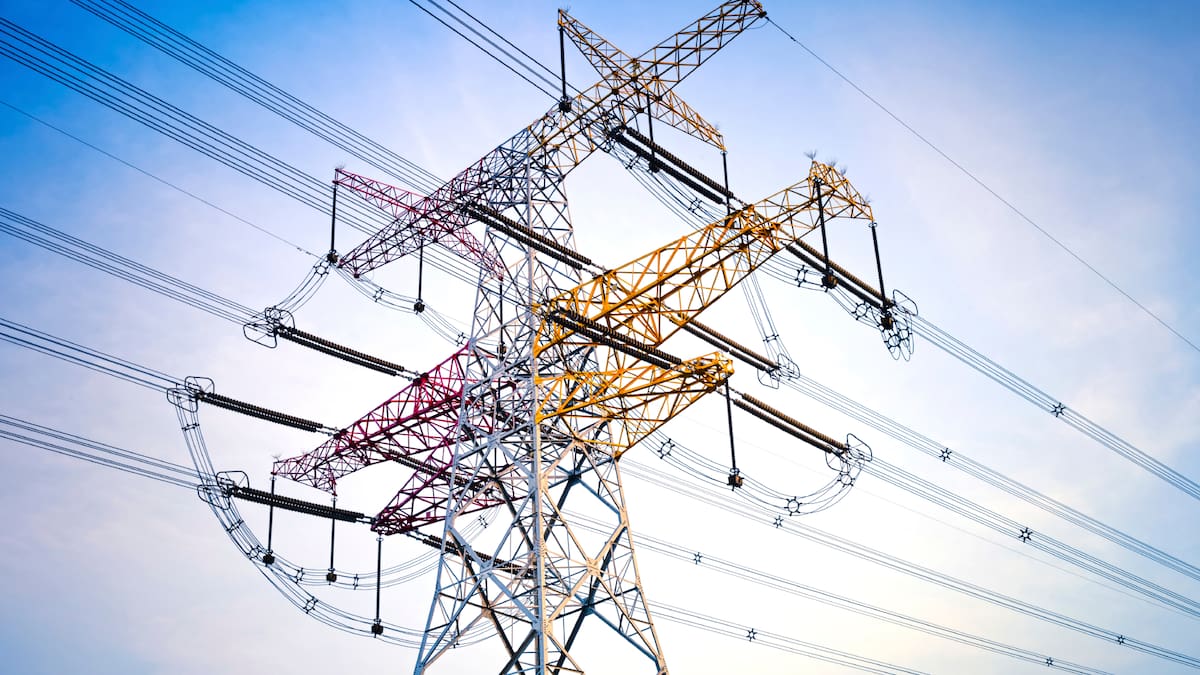
Auckland is going to need more power, Vector chief executive Chris Blenkiron says.
Auckland is going to need more power as the city expands and as the take-up of electric vehicles increases, Vector chief executive Chris Blenkiron says.
In a speech to an event held to launch a report on Auckland’s energy future, Blenkiron noted about 90% of New Zealand’s power comes from
renewables.
“The opportunity now is to use that electricity in place of petrol, diesel, gas, and other fuels,” Blenkiron said.
“So, first, Auckland will need more electricity, even as we use more energy more efficiently.”
In the last 10 years, Vector had added more than 124,000 new homes and businesses to its electricity network.
Advertise with NZME.
Over the next 10 years, demand from electric vehicles alone could be the equivalent of about 150,000 new homes.
Blenkiron, who became chief executive of the electricity and gas distribution firm last December, said new developments should pay for new capacity.
“When new development requires extra network capacity, it should pay for that cost.
Advertise with NZME.
“Without that contribution, the cost does not disappear – it falls on households and businesses across our network through higher power bills.
“Existing customers end up subsidising new development, even if their own electricity demand has not increased.”
Blenkiron said that without those new connections, peak demand on the Vector network in Auckland would have fallen by about 10%.
Nearly all of the need for extra capacity had come from connecting new homes and businesses, he said.
But Vector was now starting to see more demand from customers already connected to the network.
Vector chief executive Chris Blenkiron.
Looking ahead, growth was no longer just about new connections, he said.
Vector anticipates a net increase in peak demand of 300 megawatts over the next 10 years – roughly 16% more than it is today.
“Now growth should pay for growth, but our approach must recognise where that growth is coming from.”
Advertise with NZME.
Vector has 120,000 customers on its gas network.
The 30 largest commercial and industrial customers on its network use more than 45% of the gas flowing through it.
“Helping those businesses electrify where it makes economic sense could ease pressure on gas supplies for customers who cannot switch,” he said.
In the future, EVs could help manage demand, not just add to it.
There are about 60,000 EVs in Auckland today.
Over the next 30 years, the total is expected to exceed one million.
“In one way, this could be a problem.
“If only 10,000 of those EVs were to plug into commercial fast chargers all at once today, it could double Auckland’s current peak load,” he said.
“But as EV battery range increases, there’s less need to charge the moment people get home.”
Shifting charging to quieter times overnight could help reduce pressure on the network.
The next step would be two-way charging, using a car’s battery to feed electricity back to the network when demand is high.
Two-way charging is already being trialled in New Zealand.
“So with smart charging and potentially two-way charging, EVs are becoming a critical part of the solution,” Blenkiron said.
Batteries are already helping Auckland defer network investment.
Seven large battery systems are operating across Auckland’s network today, allowing Vector to defer about $15 million of conventional network investment, he said.
Today, the cost of a fully installed battery storage system has fallen about 93% from what it was in 2010, he said.
“That is the practical value of batteries, they’re not replacing every network upgrade, but they’re giving us another option.”
Blenkiron said the more Auckland increased its reliance on electricity, the more important it was to spot risks earlier.
The company uses helicopters and drones to capture more than a million images and scans of Auckland’s overhead power network.
Artificial intelligence and digital tools help identify potential problems before they cause outages.
Vector is planning to spend about $5.4 billion on Auckland’s electricity network over the next decade.
The company spent a record $512m in 2026.
The report, Powering Auckland’s Future, projected that excluding EV charging, the average New Zealand household’s power bill in 2050 could be similar to what it was in 2010 after inflation.
Auckland could save up to $17b over the next decade by planning now for the region’s energy transition amid decreasing domestic gas supplies and global energy uncertainty, it said.
The report, commissioned by Auckland Council and co-funded by the Energy Efficiency and Conservation Authority, highlights the need for Auckland to be better prepared for increasing electricity demand as the region grows.
Auckland Mayor Wayne Brown said businesses don’t invest where power is uncertain.
Auckland Mayor Wayne Brown.
Brown, a trained engineer who played a role in getting Auckland’s power supply up and running after a six-week blackout in 1998, said if the city became “famous again, the whole country would pay”.
“Right now the system is shifting underneath us.
“Domestic gas is running down.
“Petrol and diesel prices are volatile.
“Electric vehicles and heat pumps are taking off and electricity demand is climbing – especially at that winter evening peak level.
“We aren’t about to run out of energy, so this isn’t a reason to panic – it’s a reason to plan.”
Auckland’s biggest energy decisions were not necessarily energy decisions.
“They are decisions about where we grow, how we build, and how we get people around.
“No more fast-track subdivisions way out in the boondocks,” Brown said.
“That isn’t going to reduce energy demand.”
Jamie Gray is an Auckland-based journalist, covering the financial markets, the primary sector and energy. He joined the Herald in 2011.
Gift article
Save
Share
Latest from Business
PremiumShares
Market Close: NZ sharemarket flip Monday