A 14-year-old quit Instagram for a month and discovered something surprising
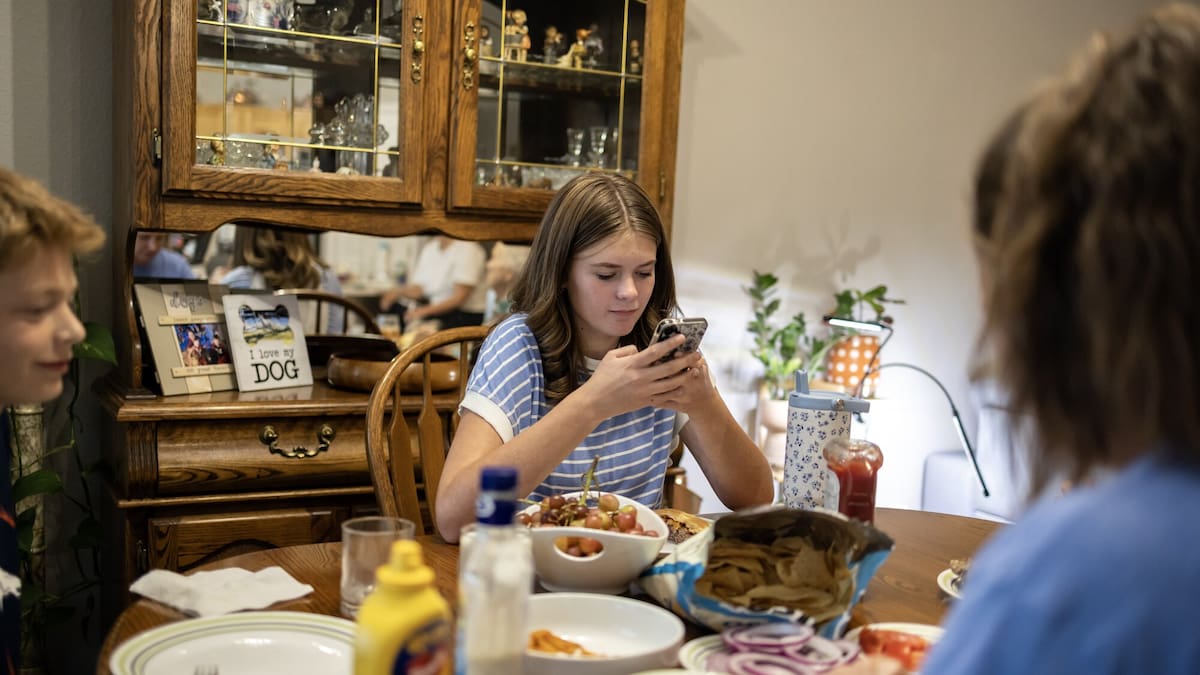
Over the course of a voluntary fast, Addisyn Mace rediscovered the parts of herself that social media had eclipsed.
The night before Addisyn Mace started the detox, she tucked herself into a bedroom nook and allowed herself one last binge. She was 14, a month into her first year of
high school, the kind of kid who went to church every Sunday and never failed a test, but she wasn’t thinking about God or school as she unlocked her phone.
She opened Instagram. Online, a woman curled her hair. Boys yelled. Boys played basketball. A dachshund ate a cucumber. A man in a car ate takeout. A woman in a car shared her opinions.
Addisyn lingered on each video for three seconds or less. She thumbed past a makeup tutorial and a trailer for the movie version of her favourite book. She ignored the sweet calico begging at her feet as she zipped by one cat video then another. In the kitchen, her great-grandmother was baking cinnamon rolls, and, online, Addisyn watched a stranger create the same treat.
She had begged for the right to watch these clips. She had asked when she was 12, then again for her 13th birthday, to download Instagram so she could see what other girls saw as they stared at their phones during hangouts. Addisyn’s mother, Shera, had used social media for nearly two decades, but she’d grown increasingly sceptical of the apps’ influence. She made Addisyn wait until she turned 14 to join.
Addisyn knew why her mother thought social media was bad for her. Every school lecture on bullying warned kids to stay off Snapchat. And just a few weeks earlier, Addisyn had read that Meta agreed to pay Colorado and other states and territories US$18 billion ($32.4b) after a coalition of attorneys general sued the social networking company for damage they said Instagram and Facebook have done to young people.
Addisyn had been on for just five months, but already she could feel that Instagram had reshaped her days and, most likely, her brain. She used to come home from school and read or practise guitar. Now, she watched other people strum online. She scrolled past her favourite country singer, Morgan Wallen, as he sang the opening lines of I Got Better, then she DM’d her mother a cartoon cat meme.
Shera was 5 metres away, curled up with her own phone in the living room, half-watching a Broncos game, half-staring at the inspirational stories that made up her Instagram feed. She had tried to limit how much time her children spent on the internet, but she was an exhausted single mother who worked fulltime. Most evenings, she felt like Instagram was all she had.
Advertise with NZME.
“Mum,” Addisyn called from her nook. “You didn’t respond to that meme I sent you.”
Assistant Principal Laura Burke takes a photo of Addisyn, Ben Forman and Scarlett Sable at VALE. Photo / Chet Strange, the Washington Post
Shera wandered back to her daughter’s bedroom and found her sitting in a fuzzy pink chair in a room lit only by a makeup vanity. Addisyn had decorated the room with analogue entertainment. She had a shelf full of young adult novels and a crate stuffed with records she played on a turntable, but she didn’t engage with them as often as she had before.
“I saw it,” Shera said.
“But you didn’t respond,” Addisyn said. “How do I know you saw it if you don’t respond?”
They had only an hour or two left before they gave up the devices that both entranced and isolated them. A non-profit had challenged students at Addisyn’s school to quit social media for a month, and Addisyn had agreed – partly because she wanted to be a good student, partly because she knew that she was already addicted to the tiny videos she barely watched and couldn’t remember.
Shera had decided she’d do the detox, too, but as the start of it drew near, they both felt more than a little worried.
“It’s literally how I relax,” Shera said as she looked back at her phone.
“I know,” Addisyn said. “It’s kind of all I want to do.”
Advertise with NZME.
The next morning, the assistant principal at Venture Academy of Leadership and Entrepreneurship (VALE) called Addisyn and the other freshmen to a special lecture. It was 8am, early enough that more than half wandered in looking like they’d rather be in bed. Several wore blankets around their shoulders. Without a word, they deposited their phones into pouches on a wall.
Like many schools across the United States, VALE had tried to find ways to break its students’ attachment to their phones. More than half of US states now ban phones “bell-to-bell,” while Colorado and others allow districts to create their own rules.
Last year, VALE partnered with the nonprofit NoSo Connection Collective to lead its entire student body through a month-long detox from social media. The nonprofit was created by a Colorado teenager in the years after she lost 10 classmates to suicide. Maddie Freeman couldn’t say that social media was the only reason her peers had struggled, but she knew her own mental health had tanked soon after she turned 12 and downloaded Snapchat. Within a few months, she was competing in online “thigh gap” weight loss challenges, and she was sneaking out of class to message Justin Bieber. By the time she reached high school, she was spending every waking hour on the platforms.
The average teen spends at least four hours a day on social media sites, and nearly half of US teens say they are on “almost constantly”. That level of participation can have devastating effects on young people’s mental health and attention span, public health experts say. Multiple studies have found that heavy users are twice as likely to be depressed as non-users. Other researchers have found that social media can be particularly harmful to girls’ self-esteem and self-image.
And so VALE had brought Freeman’s non-profit back to try to reach Addisyn and her classmates before their burgeoning interest in social media turned dire. To do that, it had to persuade the kids to do exactly what social media was telling