Victim Support review reveals staff concerns over 'personal cost' of speaking out
25 November 2026, 6:40pm
Victim Support review reveals staff concerns over 'personal cost' of speaking out
Sam Sherwood
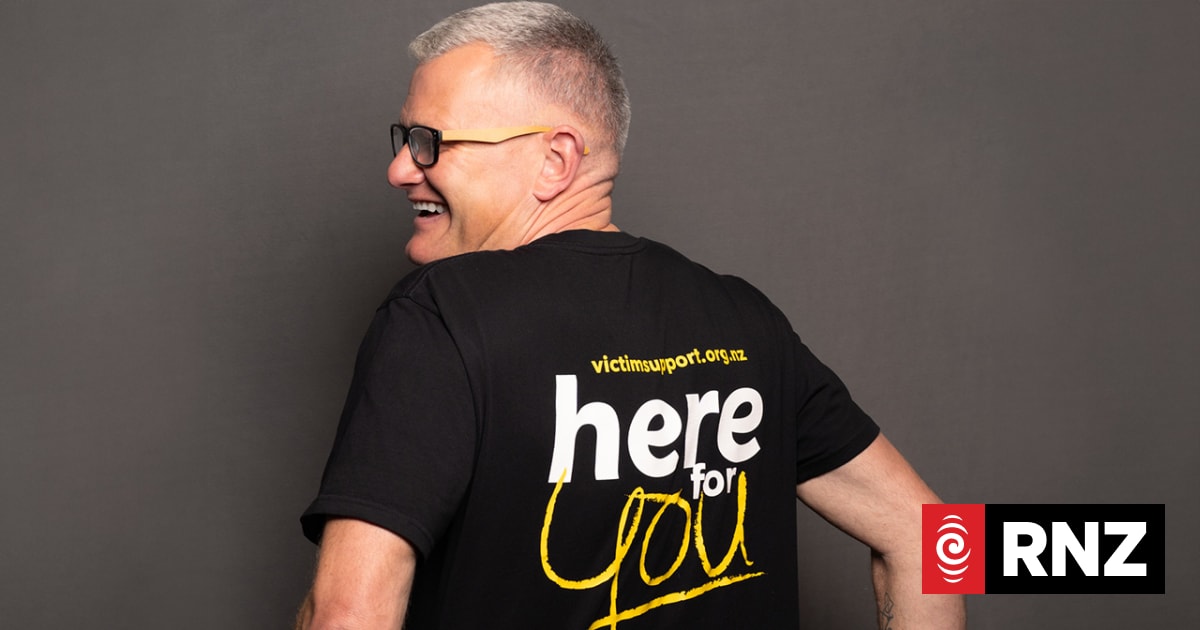
Caption:Victim Support chief executive James McCulloch.Photo credit:Supplied / Victim Support
An independent workplace culture review of the country's lead agency supporting victims of crime and trauma says some staff believed speaking up about workplace concerns carried a "personal cost" including "isolation, being assigned extra work or changes in their relationship with their manager".
The review did not find evidence of an "organisation-wide" culture of bullying or toxicity at Victim Support but it also said that staff concerns could not be treated as "solely historical or as coming from a small number of dissatisfied individuals".
Although there was a "generally positive, values-led culture overall", the review found "uneven employee experience, with concerns particularly concentrated in certain local leadership relationships, psychological safety, and confidence in the outcomes of workplace concerns raised".
Eight of those spoken to as part of the review described "repeated conduct of undermining comments, aggressive behaviour, isolation, and informal consequences for speaking up".
The review made 12 recommendations and outlined five principal opportunities for improvement.
The external review came after reporting by RNZ in July over claims of a "toxic" and "bullying" workplace culture, four years after an investigation into similar allegations.
RNZ spoke to several current and former workers who raised concerns about the culture at Victim Support. One person described it as a "very unsafe environment".
The agency's chief executive James McCulloch earlier said the agency "does not accept that these claims reflect Victim Support today".
Then, in August, the agency announced it had agreed to commission a review of the organisation's workplace culture, confidence in people leadership and the processes for resolving workplace concerns.
The review, by Charlotte Stevens, heard from 57 current Victim Support employees between August and October. This represented about 36 percent of the workforce. The review did not include speaking to former staff.
Four people outside Victim Support, including representatives of the Ministry of Justice and Police, were also interviewed.
The overall assessment was that the agency had made "substantial organisational progress" since an earlier review.
"There are identifiable strengths in organisational culture, and considerable pride in Victim Support's purpose."
Employee experience was "not uniform and appears to be materially influenced by immediate leadership and local team dynamics".
"Employees generally understand how to raise concerns, but confidence in what happens after concerns are raised is less consistent, particularly among frontline employees."
It also said the evidence did not establish a "toxic and bullying workplace culture".
"The recurring concerns appear to reflect a mix of historical experiences, organisational change, differing expectations and understanding, and some current, localised issues."
Among the key findings of the review was that there was a "generally positive, values-led culture overall, with genuine pride in the organisation's purpose, but experience varies considerably depending on a person's specific team and immediate leader".
In relation to senior leadership, most participants who addressed the question had confidence in the Senior Leadership Team (SLT). Confidence was strongest among SLT and national office participants and some managers.
"Frontline views are more divided, partly because the SLT is less visible to frontline staff day-to-day, and some frontline staff do not know who is on the SLT."
The review also said McCulloch's initial communications to staff about media allegations regarding the culture at the agency "drew a mixed response" from staff with "some saying they contradicted their experience and made them less willing to approach him".
It also said that participants were "divided" as to why concerns continued to be raised about the organisation.
"Sixteen attributed the concerns to a small number of aggrieved individuals, 7 said the issues are real and unresolved, and 22 gave mixed explanations.
"Any concerns raised were generally associated with specific teams or working relationships, and most respondents did not describe them as widespread across the organisation."
Some key organisational strengths included "genuine pride" in Victim Support's purpose and commitment to victims as well as wellbeing support that participants valued and strong awareness of how and where to raise a concern.
Among the principal opportunities for improvement were closing the gap between raising a concern and seeing a visible outcome by providing clarity on process, privacy and legal limitations as well as individual staff responsibilities.
It also details improving awareness of the "established safe routes for raising concerns" and strengthening the capability of team leaders and district managers.
The review also identified increasing the visibility of senior leaders to frontline staff and making progress against earlier reviews visible to all people.
The review detailed several matters outside its scope including determining whether any individual allegations should be upheld.
It said there were several limitations, including that former employees were not included in the participant group "because the review is of the current culture".
The