PIA appoints Adrian Hamilton-Manns as CEO to lead its private-ownership era
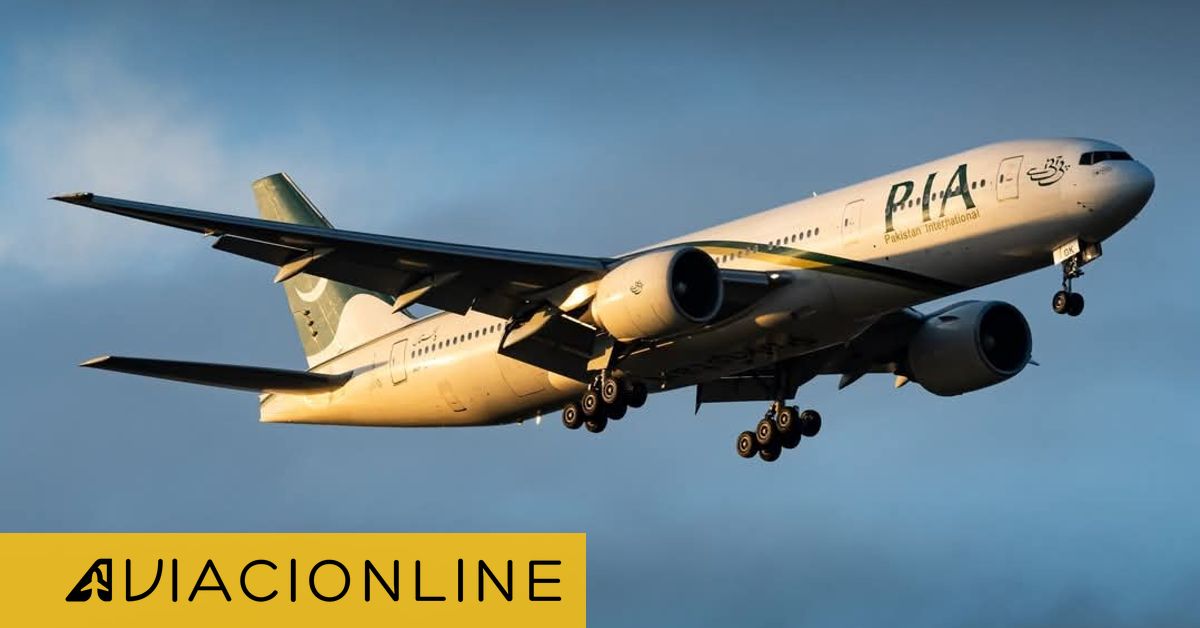
Resumen autogenerado por IA
- PIA appointed Adrian Hamilton-Manns as its new CEO, with the goal of making the airline profitable in its first year under private management.
- Hamilton-Manns, a New Zealander with more than 30 years in the industry and experience at low-cost carriers, replaced Amir Hayat and must now adapt his model to a full-service airline.
- PIA was privatised: the consortium led by Arif Habib won the auction for the 75% stake in December 2025 and operational management passed to PIA Equity Ltd in June.
- The company faces an ageing fleet and poor reliability; it received its first Boeing 787-9 on a crewed lease from Norse Atlantic and is negotiating the purchase of 16 Dreamliners.
- The new owners' plan foresees growing the fleet from 19 to 64 aircraft in eight years.
- PIA lost market share in the Pakistani air market and competes with domestic and international airlines; its return to North America depends on the FAA.
5 min.
Pakistan
Pakistan International Airlines (PIA) appointed Adrian Hamilton-Manns as its new chief executive on Monday (2), a decision the company itself presented as a decisive chapter in its transformation. The New Zealand executive took up the post with immediate effect and replaced Air Vice Marshal Amir Hayat, who ran the airline for four and a half years and steered the privatisation process through to the transfer of shareholding control.
Hamilton-Manns has more than 30 years in the industry and has led three airlines as their top executive. He was founding CEO of flyafrica.com between 2012 and 2016, chaired Kazakhstan’s FlyArystan from 2020 to 2024 and joined SalamAir, Oman’s low-cost carrier, in July 2024. He previously worked at Air New Zealand, where he began his career in 1997, as well as South African Airways, IndiGo and Pacific Blue. His professional profile describes him as a turnaround specialist.
His tenure at FlyArystan produced the numbers that explain the choice. According to the Air Astana group, the subsidiary’s revenue grew 384% between 2020 and 2023, from US$57.4 million to US$277.8 million, and the operation scaled up to 19 aircraft. At SalamAir, the company operated 5,144 flights and carried 712,610 passengers between April and June 2025, according to Forbes Middle East.
Preguntas frecuentes
- Who is Pakistan International Airlines' new CEO? PIA's new chief executive is Adrian Hamilton-Manns, a New Zealander with more than 30 years of experience in the aviation industry.
- What experience does Adrian Hamilton-Manns bring? Hamilton-Manns has led three airlines as their top executive. He was founding CEO of flyafrica.com, chaired FlyArystan and joined SalamAir. He previously worked at Air New Zealand, South African Airways, IndiGo and Pacific Blue.
- When did PIA stop being state-owned and who won the auction? PIA stopped being state-owned in December 2025, when the consortium led by Arif Habib Corporation won the auction for the 75% stake with a bid of 135 billion rupees.
- What are the profitability and fleet targets under private management? The new owners argue that PIA can be profitable in its first year under private management and expect the fleet to grow from 19 aircraft to 64 in eight years.
- Which aircraft did PIA recently receive and under what agreement? PIA received its first Boeing 787-9, which landed in Islamabad as flight PK786 from London Heathrow. The aircraft is part of a two-aircraft 787-9 lease signed with Norse Atlantic Airways, which provides the aircraft, crew, maintenance and insurance.
- What are the main challenges facing the new CEO? Hamilton-Manns must bring cost discipline to a full-service airline, improve operational reliability, recover market share and move forward on the return to North America, where the FAA keeps Pakistan in Category 2.
The friction point lies in the business model. Almost all of the new CEO’s recent career has been spent at low-cost airlines, with lean structures and a heavy weight of ancillary revenue, whereas PIA is a full service carrier with a mandatory domestic network, a workforce of close to 6,500 employees and a reputation battered by years of losses. The challenge will be to bring cost discipline to a company accustomed to political interference.
The legacy of the move to the private sector
PIA ceased to be state-owned in December 2025, when the consortium led by Arif Habib Corporation won the auction for the 75% stake with a bid of 135 billion rupees, around US$482 million, in a transaction that valued the company at 180 billion rupees. The group also brings together Fatima Fertiliser, City Schools and Lake City Holdings, and operational management was transferred on 29 June last to PIA Equity Ltd, the vehicle created for the privatisation of PIA.
That first closing provided 125 billion rupees (US$446 million) in fresh capital for the company and 55 billion (US$196 million) as a direct payment to the State. The bulk of the historical liabilities, some 825 billion rupees, was left in a state holding entity, while the remaining liabilities are being settled under a five-year schedule. The deal also guaranteed job security for the workforce for twelve months, a protection that now expires.
The new owners set an explicit target. Arif Habib said in July that PIA can be profitable in its first year under private management and that the fleet must grow from 19 aircraft to 64 in eight years, with a first stage of 38 aircraft between four and seven years old. The plan includes returning to service the aircraft currently out of operation for lack of spare parts and strengthening the engineering facility in Karachi.
An ageing fleet and the Dreamliner bridge
The inventory is the Achilles heel. Company records list 12 Boeing 777s, 15 Airbus A320s and five ATRs, with average ages above 20 years on the 777s. A PlaneSpotters survey cited by specialist media i