'That was actually a shock': Kiwi crypto founder on reported link to sanctioned Russian network
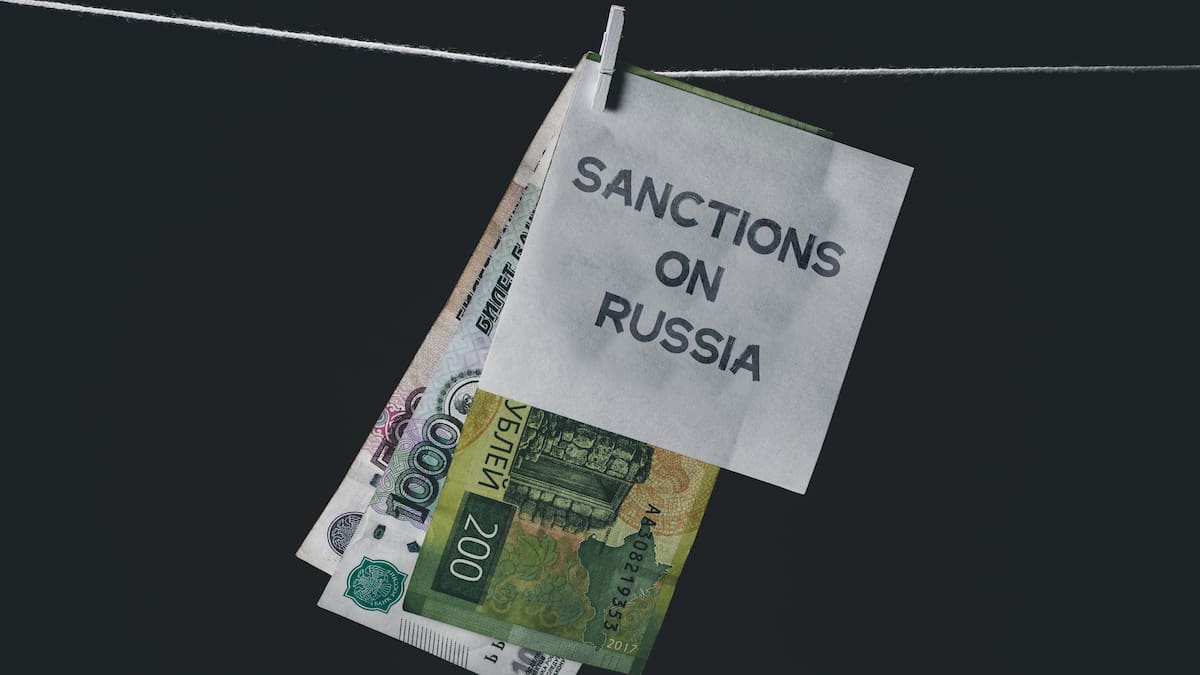
New Zealand recently sanctioned the A7 network. An international report found links to it in Auckland. Photo / 123RF
An Auckland-based crypto payment firm has been linked by international researchers to a sanctioned Russian money-laundering front.
UK-based non-government organisation the Centre for Information Resilience (CIR) last month released a report into the A7 network, finding technical parts of its back-end infrastructure were linked with New
Zealand-registered financial services provider Qbanq.
Qbanq’s Auckland-based director said he had been unaware of the link to A7, his business had yet to process any payments and the code in question would be replaced.
A7 is a payment processing firm owned by a fugitive Moldovan oligarch and a state-owned Russian bank.
Advertise with NZME.
The company’s anonymous payment services have been widely reported to have transmitted billions of dollars to evade sanctions imposed after the invasion of Ukraine, particularly by Russian companies buying critical components for military drones.
In May New Zealand joined governments in Washington, Brussels and London in sanctioning A7.
Foreign Minister Winston Peters said at the time: “We are targeting the payment infrastructure that has helped enable Russia’s war against Ukraine.”
The CIR report identified Russian computer programmer Artem Shelengovskiy, and his companies True Code and Backend, as having helped the recent launch of A7 International, an Azerbaijani-based operation seeking to broaden A7’s operations.
Advertise with NZME.
The report said Shelengovskiy had moved to New Zealand in 2022. Messages and phone callsto Shelengovskiy and True Code’s New Zealand office sent by the Heraldwent unanswered.
“Strong open-source evidence shows that Shelengovskiy and his companies appear to have worked on A7 products since at least May 2025,” the report said.
The report found a payment system used by A7 International called Amani AI, ostensibly owned by a company registered in Togo, was also operated by New Zealand-registered Qbanq.
The owner – both sole director and shareholder – of Qbanq is Tehmus Mistry.
Mistry is an Auckland-based tech founder who namechecks Web3 and Blockchain on LinkedIn when describing his focus on “developing secure, scalable infrastructure for crypto exchanges, smart contracts and AI-driven financial solutions”.
Tehmus Mistry, the founder of Qbanq.
Mistry told the Heraldhe was unaware of any A7 links until reading the CIR report, and the code in question would be replaced before launch.
“That was actually a shock to me,” Mistry said on reading the report.
He emphasised Qbanq had yet to launch and had not processed any financial transactions.
Advertise with NZME.
Mistry blamed the linked code on subcontractors, but said he had not engaged Backend or True Code.
However, he believed Shelengovskiy may have been involved in building his site: “When they were building software there were groups of developers.
“So I believe that may have been Artem over there, but I don’t know who he is as a person as such.”
Mistry emphasised he and Qbanq were compliant with all anti-money laundering and sanctions legislation.
“We haven’t taken on any Russian companies on board at all, and as I said we are still in test mode,” he said.
The CIR report was careful to couch its findings regarding Mistry and Qbanq: “While open-source evidence suggests a connection between qbanq.nz and the wider A7 network via Backend and True Code, CIR does not make any allegations of wrongdoing against ... Tehmus Mistry.”
Mistry said it was “unfortunate” CIR had not contacted him prior to publication.
“Our platform was being built by an overseas company and when I asked how our software had similar components to the other [A7] software, they said that it is software and the components will be used by many platforms to do certain functions and does not [mean] anything sinister,” he said.
CIR’s report has been noticed in Wellington. A spokesperson for the Ministry of Foreign Affairs and Trade, which oversees compliance with the Russia Sanctions Act, last week told the Herald: “We are aware of a report concerning a New Zealand company and the A7 network.”
The spokesperson was unwilling to say what actions were being taken as a result.
“We do not comment on operational regulatory matters,” the spokesperson said.
Matt Nippert is an Auckland-based investigations reporter covering white-collar and transnational crimes and the intersection of politics and business. He has won more than a dozen awards for his journalism – including twice being named Reporter of the Year – and joined theHeraldin 2014 after having spent the decade prior reporting for business newspapers and national magazines.
Gift article
Save
Share
Latest from Crypto
Banking and finance
Revolut the first tech company to become a 'bank' in NZ
02 Nov 08:10 PM
PremiumCrypto
How 3 failed crypto platforms left some Kiwis out of pocket and others in the money
02 Nov 12:00 AM
PremiumCrypto
Unicorns and Keanu Reeves: Inside the billion-dollar Futureverse collapse
20 Aug 08:28 PM
Auckland’s gridlock fix: Small changes, big gains
15 Nov 03:00 PM
Advertise with NZME.